


Dental Implants Or Bridgework – Which One Is Better?

Dental Implants
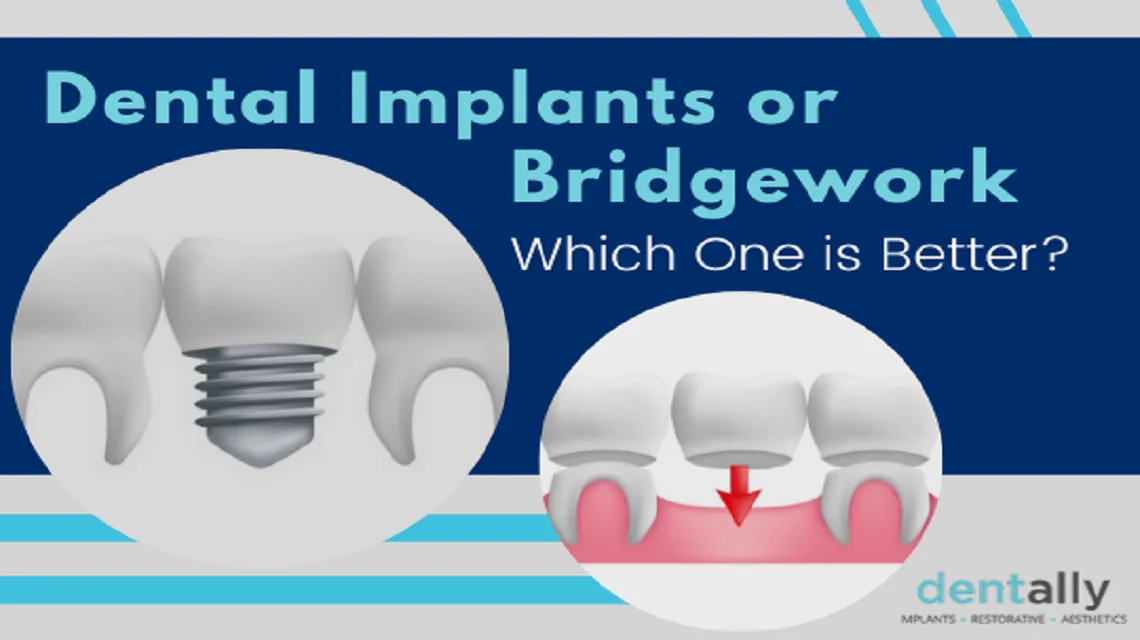
A tooth basically comprises two parts: the crown that you see and the root that remains enclosed by bone and prevents the tooth from any dislocation. According to the best dentist in India, with the help of a dental implant, the replacement of the root is carried out. Unlike a natural tooth root, a dental implant replaces the root by fusing directly to the jawbone, then attaching a crown to become a self-contained tooth identical in function and appearance to your natural tooth.
Table of Contents
Fundamental prerequisites of dental implants in India:
- Adequate quality and quantity of bone for anchoring or supporting the implant
- Healthy gums around the adjoining teeth
- Adjoining tooth quality that supports a natural cosmetic result
Dental Bridge
On the other hand, a dental bridge is a prosthesis or restoration set in place through attachment with natural adjoining teeth. The replacement tooth is known as a “pontic” (from the French term “pont” meaning bridge), while the adjoining teeth—called abutments—offer support on both sides.
Attaching the bridge involves removing a layer of enamel from the abutment teeth and placing crowns cemented to the middle pontic, fusing together a three-unit bridge anchored to your adjacent teeth.
Benefits & Drawbacks: Implants vs. Bridgework
Benefits of Dental Implants
- They’re aesthetic, reliable, functional, and predictable
- They don’t have any impact on adjacent teeth
- They’re not susceptible to decay
- They’re less likely to contract gum disease
- They have more longevity
Drawbacks of Dental Implants
- They’re more costly
- They need more time to plan
- They call for minor surgery to be conducted
- They need proper healing time prior to the replacement of the permanent tooth
Benefits of Bridgework
- They’re also aesthetic, reliable, functional, and predictable
- They’re more affordable
- They need less time to show the final result
Drawbacks of Bridgework
- They demand the removal of enamel from adjacent teeth
- They need recreation of adjacent teeth provided they have crowns
- They can lead to tooth decay
- They may require supplementary root canal treatment if adjoining nerves are impacted
- If not maintained properly, they can lead to gum disease
- They have less longevity
FAQs About Dental Implants and Bridgework
Which is better: a dental implant or a bridge?
The best option depends on the number and position of missing teeth, the condition of adjacent teeth, bone support, and the patient’s treatment goals.
Does a bridge affect nearby teeth?
A conventional bridge is supported by neighbouring teeth. A dentist can explain whether that approach is appropriate for the individual case.
How should I choose between the two options?
A clinical assessment, including the health of the gums, jawbone, and adjacent teeth, helps determine the most suitable replacement plan.
-
Other Blogs
- Smile Design and Personality: How to Get a Smile That Feels Like You
- Celebrity Smile Transformations: What Can Change a Smile's Look?
- What Makes a Celebrity Smile Truly Memorable?
- How a Smile Shapes a Celebrity's Public Image
- 10 Celebrity Smiles We Can't Forget, and Why They Work
- Dental Veneers: Before & After, Benefits, and Common Myths
Make an Appointment
-
Other Blogs
- Oral Health and Cognitive Defense: The Connection Between Dental Care and Dementia Prevention
- Confused between when to go in for a filling or a root canal?
- The Oral Factor in Pneumonia: Exploring the Denture-Pneumonia Link and Oral Health’s Impact on Overall Well-being
- Dealing with Dental Cavities: Causes, Treatment, and Prevention
- Bridal Radiance: Mastering Your Smile Makeover with India's Top Cosmetic Dentistry Treatments
- The Future of Restorative Dentistry: How 3D CBCT Imaging and Computer-Guided Surgery Make Dental Implants Safer
- Mouth Cancer: Factors, Symptoms, and Prevention
- Why We Use Nobel Biocare Dental Implants: A Clinical Perspective
- Tooth Extraction – Key Things You Need To Know
- Endosteal Dental Implants: Procedure, Benefits and Who They Are For
- Why Regular Dental Check Ups are a True Investment?
- Make Your Oral Health Better By Brushing Up On Dental Care Basics
- Why Is It A Necessity To Choose A Right Dentist?
- Single-Tooth Dental Implants: Replacing Individual Missing Teeth
- Everything You Need To Know About Dental Implant
- DENTAL IMPLANTS: WHY, WHEN AND HOW?
- The Link Between Poor Dental Health and Brain Shrinkage: Insights from a Recent Study
- Why Do Dental Implants Fail? Causes, Warning Signs & How to Prevent It
- How to Get Rid of Jaw Pain on One Side: Causes, Treatments, and Tips 🦷
- How Smile Makeover Leaves A Positive Impact On Your Life?
- Restoring Dental Health: Comprehensive Dental Restorations
- Nurturing Healthy Smiles: The Power of Positive Habits for Dental Wellness
- Dental implant procedure work The Complete 2026 Procedure Guide & Benefits
- Dental Veneers: Before & After, Benefits, and Common Myths
- The Hidden Link: How Dental Implants Preserve Jawbone Health and Prevent Facial Collapse
- Treatment Options for Missing Teeth: Restore Your Smile & Confidence
- What Does Lemon Do to Teeth: The Effects, Risks, and Benefits
- The Impact of Sugar on Teeth: How Sweet Treats Can Harm Oral Health
- How Long Do Veneers Really Last?
- What Is Menstruation Gingivitis? How Women's Periods Affect Gum Health
- Navigating Invisalign: Addressing Pain and Discomfort with Comfort and Confidence
- Transform Your Gummy Smile: A Complete Guide to Causes & Modern Treatments
- Do I Need Jaw Implants? A Complete Medical and Dental Guide
- The Importance of Regular Dental Check-ups: A Key to Oral Health
- Dent Ally Recognized Among Top Companies in Global Dental Tourism Market by The Business Research Company
- What Disease Destroys Teeth: Understanding the Causes and Treatments
- Do You Have Acid Erosion on Your Teeth? A Comprehensive Guide
- How to Rinse with Salt Water After Tooth Extraction: A Step-by-Step Guide
- How To Prepare Yourself For Dental Implant Surgery Mentally?
- Transforming Smiles and Lifestyles: A Comprehensive Guide to Invisalign Treatment
- Midnight Relief: 10 Effective Ways to Alleviate Toothache at Night and Insights into Dental Solutions in India
- What Immediate Action should you take during a dental emergency?
- Can Dental Implants Trigger Autoimmune Disease?
- Abscess in Gums: How to Treat It Effectively
- Having unexplained pain? Not sure about the Source and Cause of Your Pain?
- Precision in Motion: Unraveling the Role of Attachments and Elastics in Invisalign Treatment
- How much does full mouth rehab cost in India?
- Fall Superfoods for Your Teeth
- Bad Breath (Halitosis): Causes and Ways to Maintain Fresh Breath
- Is a Dental Implant Painful? The Honest Truth About What to Expect