


How Do I Know If I Need a Full Mouth Rehabilitation? A Comprehensive Clinical Guide
Medically Reviewed by Dr. Shashi
Living with chronic oral discomfort, difficulty chewing, or widespread dental breakdown can gradually compromise your overall quality of life. Many patients visit a dental practice feeling overwhelmed by multiple simultaneous issues—worn-down enamel, missing teeth, jaw pain, and failing old restorations—unaware that these are not isolated problems, but signs of a collapsing oral system.
When dental issues affect most or all of your teeth, localized treatments like a single filling or crown are no longer sufficient. This is where Full Mouth Rehabilitation (FMR)—also referred to as full mouth reconstruction or full mouth revitalization—comes in.
This comprehensive guide breaks down the biological indicators, functional warning signs, diagnostic parameters, and clinical workflows involved in full mouth rehabilitation, helping you determine whether this holistic restorative approach is right for you.
What Is Full Mouth Rehabilitation?
Full Mouth Rehabilitation is a customized, highly coordinated treatment plan designed to simultaneously rebuild, restore, and re-align every tooth in both the upper and lower jaws.
Unlike cosmetic smile makeovers—which focus primarily on aesthetic enhancement of the front teeth—full mouth rehabilitation addresses function, neuromuscular balance, structural integrity, and oral health alongside aesthetics.
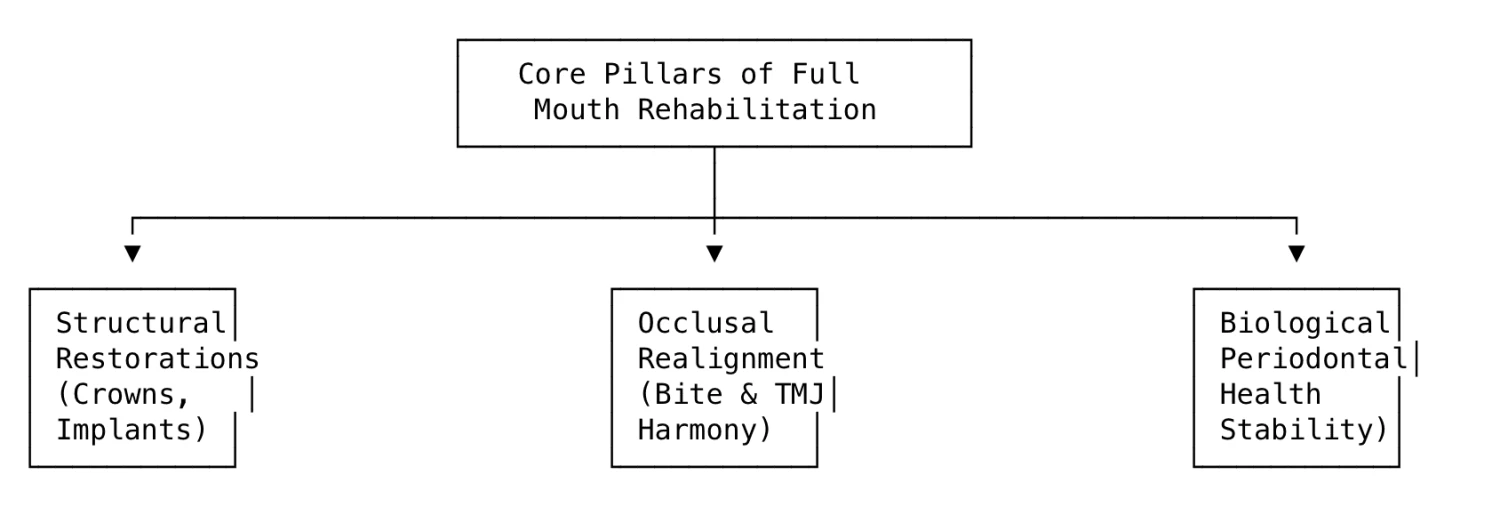
Full mouth reconstruction integrates multiple specialized dental disciplines:
-
Prosthodontics: Rebuilding tooth structure using crowns, veneers, onlays, and implant-supported bridges.
-
Endodontics: Saving compromised teeth via root canal therapy before structural rebuilding.
-
Periodontics: Treating underlying gum inflammation and managing bone levels to secure restorations.
-
Neuromuscular Dentistry & Gnathology: Restoring the ideal bite height (Vertical Dimension of Occlusion) and re-centering the temporomandibular joint (TMJ).
Key Indicators: How to Tell If You Need Full Mouth Rehabilitation
Patients requiring full mouth reconstruction rarely present with just one symptom. Instead, they experience a combination of functional, biological, and structural warning signs.
1. Severe Wear, Erosion, or Flattened Teeth (Loss of Vertical Height)
If your teeth appear significantly shorter, flat at the edges, or worn down to the yellowish dentin layer, your bite height may have collapsed.
-
Severe Bruxism (Teeth Grinding): Chronic nocturnal clenching or grinding wears away enamel, reducing the lower face height and putting stress on the jaw joints.
-
Acid Erosion: Severe acid reflux (GERD), chronic vomiting, or high intake of acidic foods dissolves enamel from the inside out, softening teeth and accelerating wear.
Enamel Loss ──> Dentin Exposure ──> Loss of Vertical Dimension (VDO) ──> Jaw Joint Strain & Facial Collapse
2. Multiple Missing, Broken, or Failing Teeth
Losing a single tooth alters the distribution of chewing forces across your remaining teeth. When several teeth are missing or broken:
-
Remaining teeth drift, tilt, or over-erupt into empty spaces, destabilizing the bite.
-
Unbalanced chewing forces cause adjacent teeth to crack, chip, or break down at an accelerated rate.
-
Food impaction in gaps leads to localized gum disease and recurrent decay.
3. Chronic Temporomandibular Joint (TMJ) Pain & Frequent Headaches
A collapsed or misaligned bite forces the jaw joints and surrounding muscles to overcompensate during chewing and swallowing. Key signs include:
-
Frequent tension headaches originating near the temples or neck.
-
Clicking, popping, or grating sounds when opening your mouth.
-
Jaw muscle fatigue or stiffness upon waking in the morning.
4. Advanced Periodontal Disease Combined with Tooth Loss
When severe gum disease (periodontitis) causes widespread bone loss, teeth become loose or shift position. A rehabilitation plan stabilizes the periodontal foundation first, then restores chewing function through splinted restorations or dental implants.
Clinical Insights & Diagnostic Rigor at Dent Ally
Full mouth rehabilitation is among the most intricate procedures in dentistry. At Dent Ally, treatment planning focuses on diagnosing the root cause of oral breakdown rather than simply capping damaged teeth.
1. What We Look for During Assessment
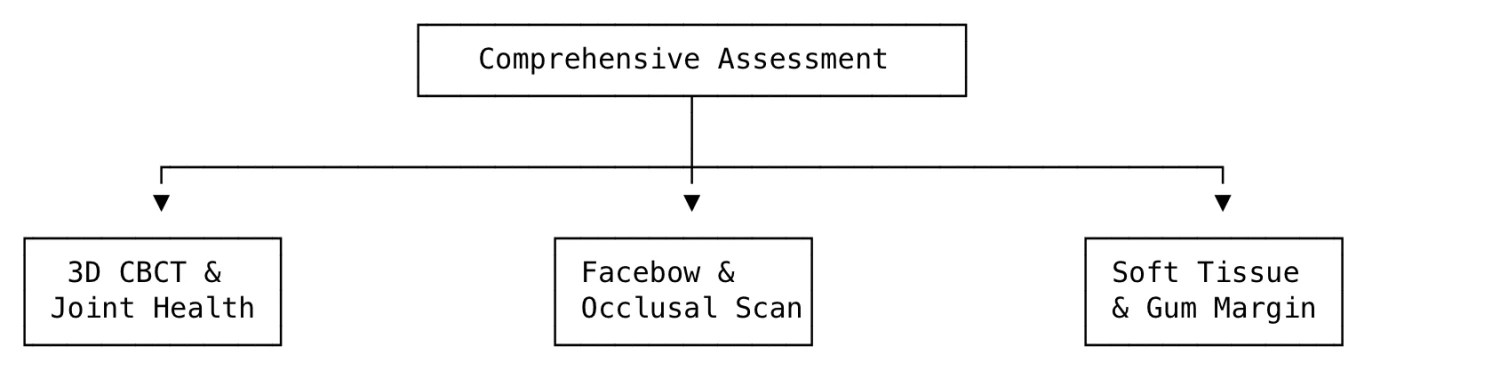
During your initial full mouth evaluation, our multidisciplinary team of prosthodontists, periodontists, and endodontists examines three primary structural factors:
-
Vertical Dimension of Occlusion (VDO): We measure the precise distance between your nose and chin when your teeth meet. Restoring lost VDO eliminates facial sagging around the mouth and relieves TMJ strain.
-
Centric Relation (CR): We locate the anatomically neutral, relaxed position of your jaw joint before designing your new teeth, ensuring your bite works in harmony with your muscles.
-
Bone Volume & Periodontal Soundness: Utilizing 3D Cone Beam Computed Tomography (CBCT), we assess jawbone density to evaluate whether teeth can be preserved or if implant-based replacements (such as All-on-4 or All-on-6) are required.
2. Common Mistakes Patients (and General Clinics) Make
In our clinical experience treating complex rehabilitation cases, we frequently see patients affected by common diagnostic oversights:
-
Treating Teeth In Isolation: Restoring individual worn teeth with single crowns without opening the collapsed bite leads to repeated crown fractures or premature failure.
-
Ignoring the Jaw Joint (TMJ): Designing new crowns on a misaligned jaw position traps the bite, causing chronic joint pain, tooth chipping, and facial muscle fatigue.
-
Skipping the Deprogramming Phase: Placing permanent crowns immediately without testing the new bite height with temporary restorations increases the risk of bite discomfort.
The Full Mouth Rehabilitation Journey: Step-by-Step
A predictable rehabilitation follows a structured, step-by-step clinical workflow:
Step 1: Diagnostics & Digital Design ──> Step 2: Foundation Care (Gums/Canals) ──> Step 3: Diagnostic Wax-Up & Provisionals ──> Step 4: Final Precision Restorations
Step 1: 3D Diagnostics & Digital Smile Design (DSD)
We capture 3D intraoral scans, facial photographs, digital X-rays, and facebow bite records. These inputs generate a virtual 3D model of your reconstructed bite and facial symmetry.
Step 2: Biological Foundation Preparation
Before placing permanent restorations, the biological foundation must be completely healthy:
-
Periodontal therapy clears deep gum infection and stabilizes surrounding bone.
-
Root canals are performed on compromised teeth to eliminate pain and infection.
-
Non-restorable teeth are removed, with bone grafting performed if implant placement is planned.
Step 3: The "Test Drive" (Diagnostic Wax-Up & Provisionals)
This is the most crucial phase. High-precision temporary crowns or overlays are fabricated based on the 3D digital model and placed on your teeth. You wear these provisionals for 4 to 8 weeks. This allows your jaw muscles, TMJ, and speech to comfortably adjust to the newly restored bite height before any final material is crafted.
Step 4: Final Fabrication and Occlusal Delivery
Once the temporary bite feels natural and comfortable, final impressions are captured. Custom restorations—crafted from biocompatible materials like monolithic Zirconia or E.max ceramics—are permanently bonded. Final bite adjustments ensure smooth, balanced chewing movements.
Life After Full Mouth Rehabilitation: Maintenance & Longevity
A reconstructed smile provides restored chewing efficiency, freedom from joint pain, and enhanced facial aesthetics. Protecting your investment requires simple, long-term care:
-
Custom Occlusal Nightguard: Wearing a custom nightguard protects your ceramic restorations from nocturnal grinding forces.
-
Water Flossing & Interdental Care: Clear plaque around crowns, bridges, and implants daily using an oral irrigator.
-
Routine Bi-Annual Checkups: Visit your clinical team every 6 months for professional bite verification and hygiene care.
If you are experiencing widespread dental breakdown or chronic jaw pain in Northern India, consulting the best dental clinic in delhi provides access to experienced prosthodontists, advanced 3D digital diagnostics, and comprehensive full mouth reconstruction care.
Frequently Asked Questions
FAQs
Q1: How do I know if I need a full mouth rehabilitation instead of just a few crowns?
Answer: Full mouth rehabilitation is required when multiple dental issues affect your overall bite mechanics, jaw joint (TMJ), and chewing function across both arches. If your teeth are severely worn down, flat, severely broken, or missing in multiple areas—causing chronic jaw pain, facial fatigue, or collapse of your lower face height—treating individual teeth in isolation will fail. A comprehensive reconstruction restores the harmony between your teeth, muscles, and jaw joints.
Q2: Is full mouth rehabilitation painful?
Answer: No. All active restorative procedures are performed under local anesthesia or conscious sedation to ensure total comfort during treatment. Some mild muscle soreness or temporary tooth sensitivity may occur during the initial adjustment phase as your jaw adapts to its newly restored bite height, but this resolves quickly and is easily managed.
Q3: How long does a full mouth reconstruction take?
Answer: Depending on the complexity of your case and whether preliminary treatments like root canals, gum therapy, or dental implants are needed, full mouth rehabilitation typically takes between 2 to 6 months. This timeline includes a crucial 4-to-8-week testing period with temporary crowns to ensure your jaw joint and muscles adapt comfortably to the new bite before final porcelain or zirconia restorations are attached.
Q4: Can full mouth rehabilitation fix jaw pain and headaches?
Answer: Yes. When worn or missing teeth cause your bite height to collapse, the jaw muscles and temporomandibular joint (TMJ) operate under constant strain, frequently triggering tension headaches, neck pain, and clicking joints. Re-establishing the correct vertical dimension of occlusion and aligning your bite in centric relation relieves strain on the TMJ and surrounding muscles.
Q5: How long do full mouth rehabilitation restorations last?
Answer: With proper oral hygiene, daily interdental cleaning, routine bi-annual dental check-ups, and the night-time use of a custom protective nightguard, high-grade ceramic or zirconia restorations used in full mouth rehabilitation can last 15 to 20 years or longer.
Complete Dental Knowledge Hub: Related Guides
Explore related topics across our treatment knowledge hub:
- Where Should I Get My Full Mouth Dental Implants Done in India?
- 4 Ways Full Mouth Dental Implants Enhance Your Smile
- Step-by-Step Journey of a Full Mouth Implant Patient: Before, During & After
- Is it Hard to Talk With All Four Dental Implants?
- What Is It Really Like to Eat With Full Dental Implants? Pros, Cons & Recover
Clinical Reference & Care Center
Center for Advanced, Digital & Microscopic Dentistry
Recognized for multi-specialty expertise in full mouth rehabilitation, neuromuscular bite restoration, microscopic endodontics, and 3D digital implantology.
Specialist Team: Led by experienced Master of Dental Surgery (MDS) prosthodontists, endodontists, and periodontists.
Quality Protocols: Hospital-grade Class B vacuum sterilization, 3D CBCT diagnostics, and transparent, patient-centered care.
-
Other Blogs
- Dental Veneers: Before & After, Benefits, and Common Myths
- The Science Behind Smile Makeovers: What You Should Know
- Are Dental Implants and Metal-Ceramic Crowns Safe During an MRI?
- How Long Do Veneers Really Last?
- Why Do Dental Implants Fail? Causes, Warning Signs & How to Prevent It
- All-on-4 vs All-on-6 Dental Implants: Which Is Right for You?
Make An Appointment
-
Other Blogs
- How Smile Makeover Leaves A Positive Impact On Your Life?
- Are Dental Implants and Metal-Ceramic Crowns Safe During an MRI?
- How painful is getting a dental implant?
- Unlocking the Secrets to a Radiant Smile: Lifestyle Choices for Optimal Dental Health
- The Vital Role of Oral Hygiene in Daily Life: A Path to Healthier Living
- Can Dental Problems Cause Headaches?
- WHAT TO DO IF YOU HAVE TOOTH PAIN DURING COVID-19?
- Tips For Keeping Your Kid's Oral Health Protected
- Things to Consider While Choosing a Dental Practice
- What is the most natural tooth replacement?
- A Smile Makeover & the Taj Mahal: How to Combine Your Dental Treatment with a Golden Triangle Tour in India
- Dental Implants Or Bridgework – Which One Is Better?
- The Oral Factor in Pneumonia: Exploring the Denture-Pneumonia Link and Oral Health’s Impact on Overall Well-being
- Skipping the Dentist? Here's What Really Happens to Your Teeth Over Time
- What are a few Alternative options to Dental Implants?
- New Revolutionary Way to Keep Your Mouth Healthy
- Do’s and Don’ts Post Root Canal Treatment, Best Root Canal Treatment in Delhi
- What To Eat After Dental Implant Surgery
- Why Is My Gum Swollen Around One Tooth in the Back? A Guide to Causes & Solutions
- The Impact of Bruxism (Teeth Grinding) on Your Dental Health
- Affordable Dental Care Options in Delhi: A Path to Healthy Smiles Within Reach
- Can a Person With Lupus Get Dental Implants?
- Ways You are Unknowingly Damaging Your Teeth
- Tongue Color Reveals Your Dental Health Problem
- Fixing Protruding Front Teeth: A Complete Guide to Your Treatment Options
- Diastema – 5 Ways To An Effective Treatment
- All-on-4 vs All-on-6 Dental Implants: Which Is Right for You?
- Seniors' Dental Health: Challenges and Solutions
- Dentists warn against using DIY dental care products
- How to Restore Tooth Enamel: A Complete Guide to Protecting Your Smile 🦷✨
- How Teeth Deep Cleaning Prevents Severe Gum Disease
- Dentist for Pregnant Women Near Me: Why Dental Care During Pregnancy is Crucial
- Abscess in Gums: How to Treat It Effectively
- How Much Does It Cost for a Cap on Tooth? A Detailed Guide 🦷
- Heard about Holistic dentists? Holistic dentistry?
- How to Neutralize Acid in Your Mouth: A Guide to Restoring pH Balance for Oral Health
- How to stop cavity in teeth
- How to Cure Gingivitis in a Week: Your Guide to Healthy Gums
- Basics and Important Things About Root Canal
- 3 Causes Of Throbbing Tooth Pain You Need To Know
- Anodontia – Dental Causes, Diagnosis, And Treatment
- How to stop bad breath from mouth?
- Home Remedies for The Moments You Are Unable to Visit a Dentist
- Why Dental Implants Are the Best Long-Term Solution for Missing Teeth in India (2026 Complete Guide)
- What Is The Importance Of The Dental Clinic In India?
- Can Oral Health Impact Mental Health? The Surprising Connection
- Is a Dental Implant Painful? The Honest Truth About What to Expect
- What Is the Most Serious Dental Disease? Uncovering the Silent Threats to Your Health
- How to Improve Your Dental Hygiene Routine for a Healthier Smile
- Tips To Maintain Your Smile Makeover Results