


Invisalign Treatment in India | Clear Aligners, iTero™ Scan & ClinCheck®
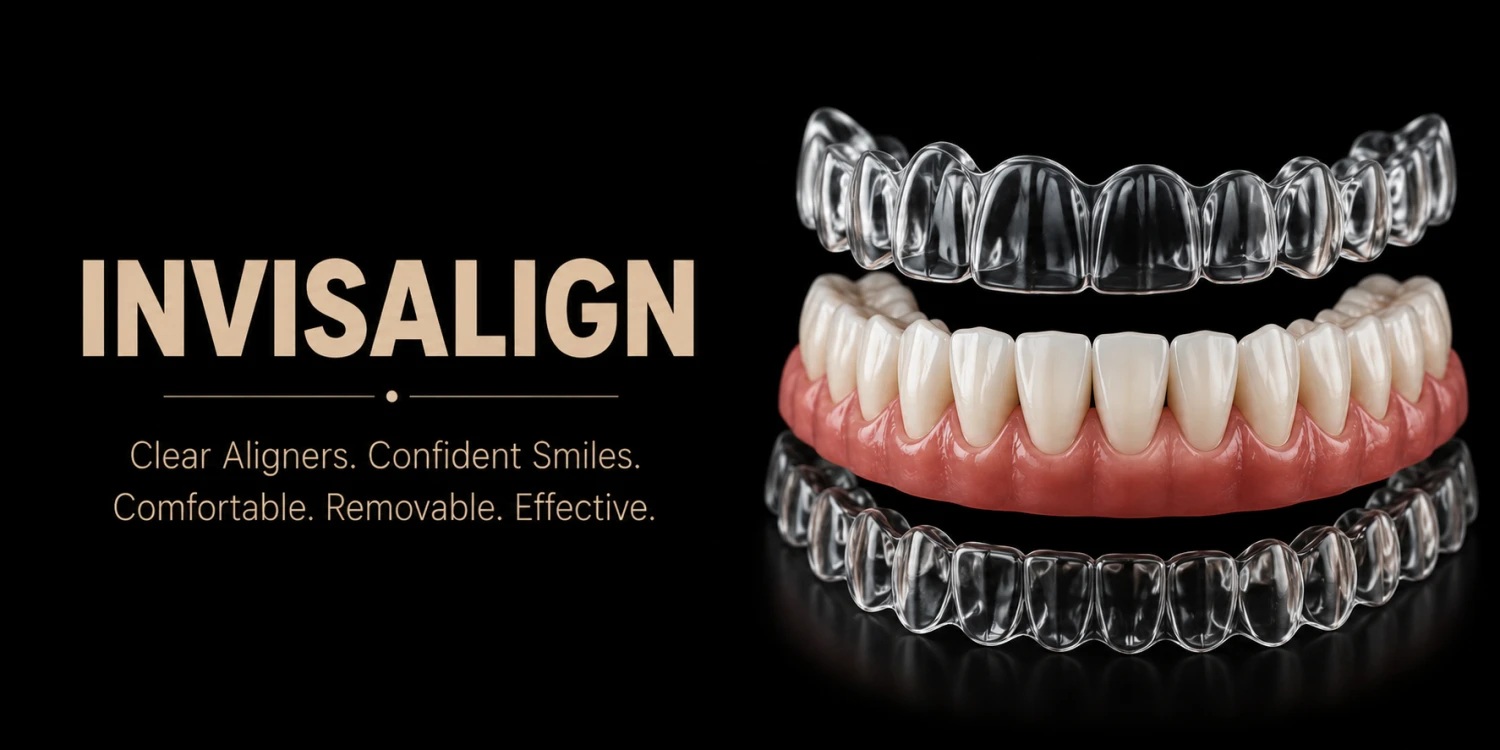
Looking for Invisalign treatment in Delhi NCR? Get advanced clear aligner treatment at Dent Ally with iTero™ digital scanning, ClinCheck® smile simulation, personalized orthodontic treatment planning, and dedicated support for both Indian and international patients.
Invisalign Treatment in Delhi NCR – Achieve a Straighter Smile with Advanced Clear Aligners
A confident smile can influence the way you look, speak, and interact with others. If you've always wanted straighter teeth but have hesitated because of traditional metal braces, Invisalign® clear aligners offer a modern, discreet, and comfortable alternative.
At Dent Ally, we combine advanced digital dentistry, personalized orthodontic planning, and Invisalign technology to help patients achieve healthier, beautifully aligned smiles with greater comfort and convenience.
Every Invisalign journey at Dent Ally begins with a comprehensive smile assessment, followed by a high-precision iTero™ Digital Intraoral Scan and a personalized ClinCheck® 3D Treatment Simulation. This allows you to visualize your expected tooth movement before your treatment even begins.
Whether you have crowded teeth, spacing between teeth, an overbite, underbite, crossbite, open bite, deep bite, or teeth that have shifted after previous braces, Invisalign may offer an effective solution depending on your individual orthodontic needs.
We also welcome patients from across India and around the world through virtual consultations, digital treatment planning, and personalized care throughout the treatment journey.

Why Patients Choose Invisalign
Over the last two decades, Invisalign has become one of the most widely used clear aligner systems worldwide because it offers an effective alternative to conventional braces while fitting more easily into modern lifestyles.
Unlike traditional braces that rely on brackets and wires, Invisalign uses a series of transparent, removable aligners that gradually move teeth into their planned positions through controlled and predictable forces.
Patients often choose Invisalign because it offers:
- Nearly invisible appearance
- Comfortable custom-made aligners
- No metal brackets or wires
- Removable during meals
- Easier brushing and flossing
- Digital treatment planning
- Fewer emergency appointments
- Greater comfort during daily activities
- Suitable for adults and teenagers in many cases
- Predictable tooth movement using digital planning
For many professionals, students, public-facing individuals, and people seeking a discreet orthodontic solution, Invisalign can provide the confidence to continue everyday life without the appearance of traditional braces.
The Science Behind Invisalign Tooth Movement
Many patients ask:
"How can a thin plastic aligner actually move teeth?"
The answer lies in controlled orthodontic biomechanics.
Your teeth are supported by bone and a specialized ligament known as the periodontal ligament.
When gentle, continuous pressure is applied by an aligner:
- Bone gradually remodels.
- The ligament adapts.
- Teeth slowly move into new positions.
Because the forces are carefully planned digitally, movement occurs gradually rather than suddenly.
This controlled process is one reason why wearing aligners for the recommended duration each day is important for predictable treatment.
Invisalign vs Traditional Braces
Both Invisalign and conventional braces aim to straighten teeth and improve bite function. The choice depends on factors such as case complexity, lifestyle, oral hygiene habits, and clinical suitability.
Invisalign
- Clear, nearly invisible appearance
- Removable for eating and brushing
- Smooth aligner material
- Digital treatment planning
- No metal wires
- Easier oral hygiene
- Fewer emergency visits related to broken brackets or wires
Traditional Braces
- Fixed appliance
- Suitable for many orthodontic cases, including some complex situations
- Cannot be removed by the patient
- Require additional attention during cleaning
- More visible than clear aligners
A detailed consultation helps determine which treatment approach is most appropriate for your individual needs.
Invisalign vs Other Clear Aligners
Patients often ask whether Invisalign differs from other clear aligner systems.
While many aligner systems work on similar principles, Invisalign is distinguished by its long history, digital treatment planning ecosystem, and integration with technologies such as iTero™ scanning and ClinCheck® software.
The most appropriate aligner system depends on your diagnosis, treatment goals, and the recommendations of your treating clinician.
Who Is a Good Candidate for Invisalign?
Many people are surprised to learn that Invisalign can address more than cosmetic concerns.
Depending on individual assessment, Invisalign may be suitable for patients with:
- Mild to moderate crowding
- Spacing between teeth
- Rotated teeth
- Overbite
- Underbite
- Crossbite
- Deep bite
- Open bite
- Relapse after previous orthodontic treatment
- Minor tooth alignment before cosmetic dentistry
Every case is unique, which is why a clinical evaluation is essential before treatment begins.
Conditions Invisalign Can Help Treat
Crowded Teeth
Crowding occurs when there is insufficient space for teeth to align properly. This can make brushing more difficult and may increase plaque accumulation.
Invisalign can gradually create space and improve alignment in many crowding cases.
Gaps Between Teeth
Spacing may develop because of genetics, missing teeth, or differences in tooth size.
Invisalign can close unwanted spaces while improving smile aesthetics and bite function where appropriate.
Overbite
An overbite occurs when the upper front teeth significantly overlap the lower front teeth.
Depending on the diagnosis, Invisalign may help improve many mild to moderate overbite cases through carefully planned tooth movement.
Underbite
An underbite occurs when the lower teeth extend in front of the upper teeth.
Some underbite cases may be managed with Invisalign, while others may require additional orthodontic or surgical treatment.
Crossbite
Crossbites may affect one tooth or several teeth and can influence bite function.
Many mild to moderate crossbite cases can be treated using customized aligner therapy.
Deep Bite
A deep bite involves excessive vertical overlap of the front teeth.
Digital treatment planning allows controlled correction for appropriately selected cases.
Open Bite
An open bite occurs when the upper and lower front teeth do not meet during biting.
Certain open bite cases may respond well to Invisalign when appropriate biomechanics are used.
Relapse After Braces
Many adults experience tooth movement years after completing braces because retainers were not worn consistently.
Invisalign is often considered for correcting relapse in suitable cases.
Can Invisalign Treat Every Orthodontic Problem?
No.
One of the most important aspects of ethical orthodontic care is understanding that no single treatment is ideal for every patient.
Some complex conditions may require:
- Tooth extractions
- Elastics
- Temporary anchorage devices
- Conventional braces
- Combined orthodontic approaches
- Orthognathic (jaw) surgery
At Dent Ally, treatment recommendations are based on clinical diagnosis rather than a one-size-fits-all approach. If Invisalign is not the most appropriate option for your case, your dentist will discuss suitable alternatives and explain the reasons behind that recommendation.
Your Complete Invisalign Journey at Dent Ally
Choosing Invisalign is more than simply receiving a set of clear aligners—it's a carefully planned orthodontic treatment that combines clinical expertise, digital technology, and consistent monitoring to help move your teeth safely and predictably.
At Dent Ally, every Invisalign treatment plan is personalized according to your smile, bite, oral health, and treatment goals. No two smiles are identical, which is why every patient receives a customized digital treatment plan rather than a one-size-fits-all approach.
Our workflow combines detailed clinical assessment with advanced digital technology, including the iTero™ Intraoral Scanner and ClinCheck® treatment planning software, to create a precise roadmap for your smile transformation.
Step 1: Initial Invisalign Consultation
Your first appointment is one of the most important stages of your treatment.
Rather than simply determining whether your teeth are crooked, we evaluate your complete oral health to understand whether Invisalign is the most suitable treatment option for you.
During your consultation, orthodontist will assess:
- Your primary concerns and smile goals
- Tooth alignment
- Bite relationship
- Facial profile
- Jaw movement
- Existing dental restorations
- Gum health
- Oral hygiene
- Previous orthodontic treatment
- Wisdom teeth (where relevant)
- Missing teeth
- Existing implants, crowns, or bridges
We also discuss your lifestyle because Invisalign requires commitment. Since aligners are removable, treatment success depends heavily on wearing them as instructed.
Many patients also ask questions such as:
- How long will treatment take?
- Will I need extractions?
- Will I need attachments?
- Can Invisalign fix my bite?
- How noticeable are the aligners?
- What happens if I travel frequently?
Every one of these questions is addressed before treatment begins so that you understand the process and have realistic expectations.
Step 2: Digital Smile Analysis
Once Invisalign is confirmed as a suitable option, we move to digital smile planning.
Unlike traditional orthodontic records that relied heavily on physical impressions, modern Invisalign treatment begins with digital analysis.
This includes:
- Digital smile photographs
- Bite evaluation
- Facial analysis
- Intraoral examination
- Digital scan
- Radiographs when clinically indicated
These records allow your treating clinician to understand not only how your teeth look today but also how they should move throughout treatment.
Step 3: iTero™ Digital Intraoral Scan
One of the biggest advantages of Invisalign treatment is the use of the iTero™ Digital Intraoral Scanner.
Instead of using conventional impression materials that many patients find uncomfortable, the iTero scanner captures thousands of high-resolution images of your teeth to create an accurate three-dimensional digital model.
What is an iTero Scan?
An iTero scan is a digital impression of your teeth and gums.
The scanner creates an extremely precise virtual model that serves as the foundation for your Invisalign treatment.
Benefits of iTero™
- No messy impression material
- Comfortable scanning experience
- High digital accuracy
- Immediate visualization of your teeth
- Faster treatment planning
- Better communication with patients
- Improved aligner fit
- Digital records that can be reviewed throughout treatment
For many patients, the scan takes only a few minutes and provides valuable information for planning tooth movement.
Step 4: ClinCheck® – See Your Future Smile Before Treatment Begins
One of Invisalign's most recognized innovations is ClinCheck®.
ClinCheck is Invisalign's proprietary digital treatment planning software that allows your dentist to design each stage of your treatment before your first aligner is even manufactured.
What is ClinCheck?
ClinCheck is a three-dimensional simulation that illustrates how your teeth are expected to move from their current positions toward the planned final result.
Instead of guessing how treatment may progress, both you and your dentist can review the digital plan together.
ClinCheck helps with:
- Planning tooth movement
- Predicting aligner sequence
- Estimating treatment duration
- Planning attachments
- Evaluating bite correction
- Reviewing the expected final smile
Many patients appreciate seeing a visual simulation of their treatment before they begin wearing aligners.
How Your Invisalign Aligners Are Made
Once your ClinCheck plan is approved, your customized aligners are manufactured specifically for your treatment.
Each aligner is designed to create small, controlled movements.
Rather than moving all teeth at once, every aligner focuses on carefully planned tooth movements that gradually achieve the desired alignment.
Most patients wear each aligner for approximately 7–14 days, depending on the prescribed treatment plan.
Invisalign Attachments Explained
One of the most common questions patients ask is:
"What are those small bumps on some Invisalign patients' teeth?"
These are called attachments.
Attachments are small tooth-colored composite shapes bonded temporarily to selected teeth.
They provide additional grip for the aligners, allowing more complex tooth movements that may not be possible with aligners alone.
Why are attachments needed?
Attachments can help:
- Rotate teeth
- Move teeth vertically
- Improve root control
- Correct bite relationships
- Increase aligner retention
- Improve treatment predictability
Not every patient requires attachments, and the number used depends entirely on the treatment plan.
Are attachments visible?
Because they are tooth-colored, most attachments are considerably less noticeable than traditional braces.
Do attachments hurt?
The attachment placement procedure is generally painless.
Some patients notice mild pressure when beginning a new aligner, but this usually settles within a few days.
Can attachments fall off?
Occasionally an attachment may become detached.
If this happens, contact your dental team so it can be assessed and replaced if necessary.
What is IPR (Interproximal Reduction)?
Another term patients often encounter during Invisalign treatment is IPR.
Interproximal Reduction is a conservative technique in which a very small amount of enamel is polished between selected teeth.
The purpose is to create additional space that allows teeth to align more effectively.
Why is IPR performed?
IPR may help:
- Reduce crowding
- Improve tooth alignment
- Enhance treatment efficiency
- Create space without extraction in selected cases
Does IPR hurt?
Because enamel does not contain nerves, IPR is generally well tolerated.
Some patients experience slight vibration during the procedure, but significant discomfort is uncommon.
Is IPR safe?
When performed by trained dental professionals following appropriate clinical guidelines, IPR is considered a well-established orthodontic procedure.
Elastics During Invisalign Treatment
Some Invisalign patients require small orthodontic elastics (rubber bands).
These elastics help improve the relationship between the upper and lower teeth.
They are commonly used in selected cases involving:
- Overbite
- Underbite
- Certain bite discrepancies
Your dentist will demonstrate how to wear elastics correctly if they are part of your treatment.
What Are Invisalign Refinements?
Many patients assume treatment ends after their final aligner.
However, orthodontic treatment sometimes includes refinements.
Refinements are additional aligners that may be recommended after the initial series has been completed to optimize the final tooth positions.
Why are refinements needed?
Every patient's teeth respond differently.
Refinements may be suggested to:
- Improve alignment
- Fine-tune bite contacts
- Correct small residual movements
- Enhance overall treatment outcome
Needing refinements does not necessarily indicate that treatment has failed. They are a normal part of treatment planning for many patients.
How Long Does Invisalign Treatment Take?
Treatment duration varies according to case complexity and patient compliance.
General estimates include:
- Minor alignment: approximately 6–9 months
- Moderate correction: approximately 9–15 months
- More complex cases: approximately 15–24 months or longer
The most significant factor influencing treatment time is wearing the aligners for the recommended 20–22 hours per day.
Skipping aligners or wearing them inconsistently may delay treatment.
Invisalign Treatment Timeline
Although every patient is different, a typical journey may include:
Week 1
- Consultation
- Digital scan
- Clinical records
Week 2–4
- ClinCheck review
- Treatment approval
- Aligner manufacturing
Delivery Appointment
- Receive aligners
- Learn insertion and removal
- Oral hygiene instructions
- Attachment placement (if required)
Every 1–2 Weeks
- Change to the next aligner
Every 6–8 Weeks
- Clinical review
- Monitor progress
- Address questions
End of Initial Series
- Clinical evaluation
- Refinement assessment if indicated
Final Stage
- Retainers
- Long-term maintenance
Invisalign Cost in Delhi NCR
One of the most frequently asked questions is:
"How much does Invisalign cost?"
The answer depends on the complexity of each case.
Factors influencing treatment cost include:
- Number of aligners
- Difficulty of tooth movement
- Treatment duration
- Bite correction requirements
- Attachments
- Refinements
- Retainers
- Follow-up appointments
A personalized consultation is the best way to receive an accurate treatment estimate.
Invisalign for Adults
One of the biggest misconceptions is that orthodontic treatment is only for teenagers.
In reality, many adults choose Invisalign because it allows them to improve their smiles while maintaining a professional appearance.
Adults often seek treatment for:
- Crowding
- Relapse after braces
- Cosmetic improvements
- Bite correction
- Smile enhancement before restorative dentistry
Invisalign for Teenagers
Selected teenagers may also benefit from Invisalign.
Treatment suitability depends on factors such as dental development, oral hygiene, and willingness to wear aligners consistently.
Parents often appreciate that aligners can be removed for meals and brushing, while teenagers value their discreet appearance.
Invisalign for Professionals
Professionals who regularly interact with clients, patients, students, or colleagues often prefer Invisalign because the aligners are less noticeable than conventional braces.
This can be particularly beneficial for individuals in customer-facing, leadership, media, hospitality, education, and healthcare roles.
Invisalign Before Cosmetic Dentistry
Orthodontic treatment is sometimes recommended before procedures such as veneers or smile makeovers.
Aligning the teeth first may reduce the need for extensive tooth preparation and contribute to a more conservative restorative approach where clinically appropriate.
Invisalign and International Patients
Dent Ally welcomes patients from different parts of India and overseas.
Many international patients begin their journey with a virtual consultation before travelling for treatment.
A typical international workflow may include:
- Online consultation
- Review of photographs and records
- Treatment planning
- Travel coordination
- Digital scanning
- ClinCheck approval
- Aligner delivery
- Remote progress reviews where appropriate
- Periodic in-person follow-up if required
This approach helps patients plan treatment alongside their travel schedules while maintaining continuity of care.
Why Digital Dentistry Matters
Modern orthodontics is increasingly driven by digital technology.
By combining clinical expertise with tools such as the iTero™ scanner and ClinCheck® software, treatment planning becomes more visual, precise, and collaborative.
Patients benefit from greater understanding of their treatment, while clinicians can plan tooth movement in a structured and predictable manner.
This digital-first approach is one of the reasons why many patients today choose Invisalign as an alternative to conventional braces.
Life After Invisalign: Maintaining Your New Smile
Completing your Invisalign treatment is a significant milestone, but maintaining your results is equally important. Teeth naturally have a tendency to shift over time due to ageing, daily chewing forces, and changes in the surrounding tissues. This is why retention is considered an essential phase of every orthodontic treatment.
At Dent Ally, we provide detailed guidance on maintaining your new smile long after your final aligner.
Why Are Retainers Important?
One of the most common misconceptions is that teeth remain permanently fixed after Invisalign treatment.
In reality, after teeth have moved into their new positions, the surrounding bone and soft tissues need time to stabilise. Retainers help hold the teeth in place during this period and reduce the likelihood of orthodontic relapse.
Retainers may help:
- Maintain tooth alignment
- Prevent teeth from shifting back
- Preserve bite correction
- Protect your investment in orthodontic treatment
- Support long-term smile stability
Orthodontists will recommend a retainer schedule based on your individual treatment.
Invisalign vs Retainers
Although Invisalign aligners and retainers may appear similar, they have different purposes.
Invisalign Aligners
- Designed to move teeth
- Used during active orthodontic treatment
- Multiple aligner sets are worn in sequence
- Each aligner creates controlled tooth movement
Retainers
- Designed to maintain tooth position
- Used after active treatment is completed
- Usually worn according to your dentist's instructions
- Help reduce the risk of relapse
In simple terms:
Invisalign moves your teeth. Retainers help keep them there.
How to Care for Your Invisalign Aligners
Proper aligner care contributes to better oral hygiene and helps keep the aligners clear.
Daily Cleaning Tips
- Rinse aligners whenever you remove them.
- Clean them gently using lukewarm water.
- Use a soft toothbrush when recommended.
- Avoid hot water, as it may distort the aligners.
- Store aligners in their protective case when not in use.
Keeping your aligners clean also reduces plaque accumulation and helps maintain fresh breath.
Oral Hygiene During Invisalign Treatment
One advantage of removable aligners is that normal brushing and flossing routines can usually continue.
Patients are generally advised to:
- Brush after every meal before reinserting aligners
- Floss daily
- Attend routine dental check-ups
- Maintain healthy gums throughout treatment
Good oral hygiene contributes to healthier teeth and gums during orthodontic treatment.
What Can You Eat During Invisalign Treatment?
Unlike fixed braces, Invisalign aligners are removed before eating.
This means patients can generally continue enjoying their normal diet.
However:
- Remove aligners before eating.
- Drink only plain water while wearing aligners.
- Brush before reinserting aligners whenever possible.
Removing aligners before meals helps reduce staining and supports better oral hygiene.
Common Mistakes That Can Delay Invisalign Treatment
Successful Invisalign treatment depends not only on the aligners themselves but also on patient compliance.
Some common reasons treatment may take longer include:
- Wearing aligners for fewer than the recommended hours
- Frequently forgetting to wear aligners
- Skipping aligners
- Missing scheduled reviews
- Not wearing elastics when prescribed
- Poor oral hygiene
- Losing aligners repeatedly
Following your treatment instructions consistently helps keep treatment progressing as planned.
Invisalign Myths vs Facts
Myth: Invisalign only works for minor cases.
Fact: Invisalign can treat many orthodontic conditions, although suitability depends on individual diagnosis.
Myth: Invisalign treatment is completely painless.
Fact: Mild pressure when changing aligners is common because it indicates controlled tooth movement.
Myth: Invisalign takes longer than braces.
Fact: Treatment time depends on case complexity and patient compliance rather than the appliance alone.
How to Choose the Right Invisalign Provider
Choosing an Invisalign provider involves more than comparing prices.
Invisalign for International Patients
India has become a preferred destination for dental care because patients can access advanced technology, experienced clinicians, and personalised treatment planning while often benefiting from lower treatment costs than in many other countries.
At Dent Ally, we assist international patients with:
- Virtual consultations
- Treatment planning before travel
- Appointment scheduling
- Digital treatment records
- Progress monitoring
- Follow-up guidance
Every treatment plan is customized according to the patient's oral health, travel schedule, and clinical requirements.
Frequently Asked Questions About Invisalign
What is Invisalign?
Invisalign is a clear aligner system designed to gradually move teeth into improved alignment using custom-made removable aligners.
How is Invisalign different from braces?
Unlike braces, Invisalign uses removable clear aligners rather than metal brackets and wires.
Is Invisalign suitable for adults?
Yes. Many adults choose Invisalign because it offers a discreet orthodontic treatment option.
Can teenagers use Invisalign?
Selected teenagers may also be suitable candidates following clinical evaluation.
How many hours should I wear Invisalign?
Most patients are advised to wear aligners for approximately 20–22 hours each day.
How often do I change aligners?
Many patients change aligners every one to two weeks, depending on their prescribed treatment plan.
Will Invisalign affect my speech?
Some patients notice a slight adjustment period during the first few days, but most adapt quickly.
Does Invisalign hurt?
Mild pressure when changing aligners is common and usually temporary.
Will people notice my aligners?
Because Invisalign aligners are transparent, they are generally much less noticeable than traditional braces.
Can I eat while wearing Invisalign?
No. Aligners should be removed before eating.
Can I drink coffee?
It is generally recommended to remove aligners before drinking coffee or other coloured beverages.
Can I chew gum?
No. Gum may stick to the aligners.
Can I drink alcohol?
Remove aligners before consuming alcoholic beverages unless drinking plain water.
How do I clean Invisalign aligners?
Follow your dentist's cleaning recommendations and avoid hot water.
Can Invisalign cause cavities?
Poor oral hygiene may increase cavity risk, which is why brushing before reinserting aligners is important.
What are Invisalign attachments?
Attachments are small tooth-coloured composite shapes bonded temporarily to certain teeth to help achieve specific movements.
Will everyone need attachments?
No. Their use depends on the treatment plan.
What is IPR?
Interproximal Reduction is a conservative procedure that creates a small amount of space between selected teeth when clinically indicated.
How long does Invisalign treatment take?
Treatment varies according to case complexity and patient compliance.
Can treatment finish earlier?
Some simpler cases may finish sooner, while more complex cases may require additional time.
What are refinements?
Additional aligners that may be prescribed to optimise the final result.
Are refinements common?
Many Invisalign patients require refinements as part of achieving the desired outcome.
Will I need retainers?
Yes. Retainers are generally recommended after treatment to help maintain alignment.
What happens if I stop wearing retainers?
Teeth may gradually shift over time.
Can I travel with Invisalign?
Yes. Your dentist can advise you on managing aligners during travel.
Can I play sports?
Yes. Many patients continue their normal sporting activities.
Can I whiten my teeth during Invisalign?
Discuss whitening options with your dentist before beginning treatment.
Is Invisalign safe?
When prescribed and monitored by qualified dental professionals, Invisalign is considered a well-established orthodontic treatment.
Can Invisalign damage teeth?
Treatment should always be planned and monitored professionally. Good oral hygiene and compliance are essential.
Schedule Your Invisalign Consultation at Dent Ally
Ready to achieve a straighter, healthier, and more confident smile with Invisalign? Book your personalized consultation at Dent Ally today and experience advanced clear aligner treatment with iTero™ digital scanning, ClinCheck® 3D smile simulation, and a customized treatment plan designed around your unique smile goals.
Whether you're based in Delhi NCR or travelling from another city or country, our team is here to help you begin your Invisalign journey with expert guidance, advanced digital dentistry, and personalized care.
Contact Dent Ally today to schedule your consultation.
Get In Touch
-
Other Blogs
- Why India is the Best Destination for Full Mouth Dental Implants
- Why Dental Implants Are the Best Long-Term Solution for Missing Teeth in India (2026 Complete Guide)
- Effective Tips To Take Before Wearing Braces
- How Teeth Deep Cleaning Prevents Severe Gum Disease
- Invisalign Before Veneers: The Modern Two-Step Smile Makeover for Natural and Long-Lasting Results
- Can You Fully Recover From Gum Disease? A Comprehensive Guide
- What Happens If Half of Your Tooth Breaks Off?
- How to Rinse with Salt Water After Tooth Extraction: A Step-by-Step Guide
- Dealing with Dental Cavities: Causes, Treatment, and Prevention
- How to Plan your Dental Appointments ?
- How To Find The Right Dental Implant Clinic?
- 10 Things I Wish I Knew Before Getting Dental Implants: A Patient's Guide
- Dentists warn against using DIY dental care products
- Is teeth gap filling painful?
- Digital Dentistry Advancements in Delhi: Pioneering Precision and Innovation
- Parts of your Teeth
- Swift Relief and Expert Care: Dental Emergency Services
- Advanced Bioclear Treatment in Delhi NCR – A Minimally Invasive Smile Makeover
- Nurturing Healthy Smiles: The Power of Positive Habits for Dental Wellness
- 🦷 How to Plan a Dental Trip to Delhi: Step-by-Step Guide for First-Timers
- Senior Dental Care in Delhi: Nurturing Smiles through Specialized Care
- What differentiates cosmetic dentistry from normal dentistry?
- The Oral Factor in Pneumonia: Exploring the Denture-Pneumonia Link and Oral Health’s Impact on Overall Well-being
- Everything you should know about dental implants before getting it done
- Want healthy teeth and gum? Include these Foods in your diet
- 🦷❤️ Gum Disease and Its Connection to Heart Disease
- Know Your Teeth
- Seniors' Dental Health: Challenges and Solutions
- My Adult Tooth is Loose! What Should I Do? A Dentist's Emergency Guide
- Ways You are Unknowingly Damaging Your Teeth
- TMJ Disorders: Symptoms, Causes, and Treatment
- Fixing Protruding Front Teeth: A Complete Guide to Your Treatment Options
- Why are my teeth yellow when i brush them everyday?
- Smile Alignment Made Easy: How to Straighten Your Teeth in India
- How Long Do Veneers Really Last?
- What Disease Destroys Teeth: Understanding the Causes and Treatments
- How To Pick Up The Right Fillings For Your Teeth?
- How Smile Makeover Leaves A Positive Impact On Your Life?
- Dental Veneers: Before & After, Benefits, and Common Myths
- Fall Superfoods for Your Teeth
- From Baby Teeth to Adult Loss: What Age Do Teeth Fall Out & Why It Matters
- Remedies for Bad Breath: Causes and Solutions
- The Benefits of Dental Implants
- 5 Ways To Keep Your Dental Implant Clean And Hygienic
- What are 10 things to keep your teeth healthy? Your Ultimate Guide
- 😁 What is the Cost of Invisalign in India?
- Is Popcorn Bad For Your Teeth? The Hidden Dangers of a Movie Snack
- What Is It Really Like to Eat With Full Dental Implants? Pros, Cons & Recover
- What Immediate Action should you take during a dental emergency?
- Understanding Regional Odontodysplasia: Causes, Symptoms, and Treatment