



The Science of Tooth Loss: What Happens to Your Jawbone?
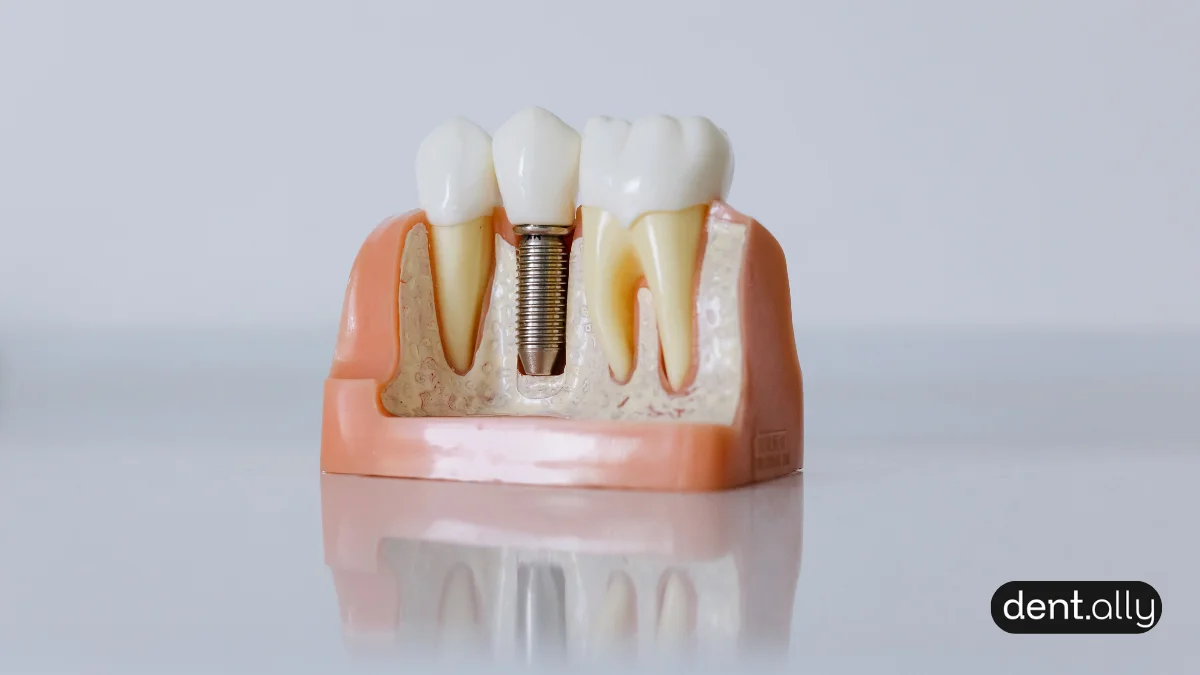
To understand how time affects your candidacy for an implant, we must examine the relationship between your teeth and your jawbone. Your jawbone is preserved through the physical stimulation of chewing. Every time you bite down, the roots of your teeth transmit mechanical forces to the surrounding bone, signaling your body to keep that bone dense and healthy. When a tooth is extracted, that stimulation ceases.
01 The Atrophy Process (Bone Resorption)
Without a tooth root, the body assumes the bone in that specific area is no longer needed. It begins to resorb (melt away) the bone tissue to repurpose those minerals elsewhere in the body:
- Within the first year of tooth loss, you can lose up to 25% of the bone volume in that region.
- Over decades, the alveolar ridge can become significantly narrower, shorter, and softer.
Because a dental implant is a titanium post designed to replicate a natural tooth root, it requires a sufficient volume of dense, healthy bone for anchorage. Bone resorption is the primary biological hurdle your dental surgeon will evaluate.
02 The Domino Effect: How Missing Teeth Cause Shifting
Your dentition operates as a dynamic, mutually supported arch. When a gap is left unrestored for years, adjacent and opposing teeth naturally drift into the void:
- Tipping: Adjacent neighboring teeth tilt or collapse sideways into the space.
- Super-eruption: The opposing tooth above or below extrudes out of its socket due to a lack of contact resistance.
- The Clinical Solution: If tooth migration has reduced the mesiodistal space needed for an implant crown, a multidisciplinary approach is employed. Your specialist may recommend a brief course of invisible aligners in Delhi to realign adjacent teeth before surgical placement.
How Dentists Overcome Years of Bone Loss
Significant bone resorption does not preclude you from receiving implants. Modern surgical dentistry provides predictable regenerative techniques to rebuild your foundation:
01 Dental Bone Grafting
If your jawbone is too thin or soft, an oral surgeon places specialized bone grafting material into the depleted site. This scaffold encourages your body to regenerate new, dense bone over a period of 3 to 6 months, establishing a stable foundation for the implant fixture.
02 Sinus Lifts (For Upper Posterior Teeth)
In the upper jaw, long-term tooth loss allows the maxillary sinus cavity to expand downward (pneumatization). A sinus lift gently elevates the sinus membrane and introduces bone graft material underneath, creating safe vertical clearance for titanium implants without encroaching on the sinus.
Advanced Solutions for Long-Term, Multiple Tooth Loss
When multiple teeth or an entire arch have been missing for years, placing individual implants with separate grafts for every tooth can be impractical.
In these advanced situations, protocols like All-on-4 dental implants in Delhi offer an efficient alternative. The All-on-4 technique utilizes four strategically angled implants to support a complete fixed prosthesis. Angling the posterior implants up to 45 degrees maximizes engagement with dense anterior bone, often bypassing the need for extensive bone grafts entirely.
Comparing Immediate vs. Delayed Implants
| Clinical Feature | Immediate Implant (Shortly after extraction) | Delayed Implant (Years after extraction) |
|---|---|---|
| Bone Density | Usually sufficient; minimal resorption. | Frequently requires a site-preserving bone graft. |
| Space Available | Arch intact; adjacent teeth have not shifted. | Teeth may have tilted or super-erupted; aligners may be needed. |
| Treatment Timeline | 3 to 6 months total. | 6 to 9+ months (allowing graft osseointegration). |
| Overall Cost | Standard surgical implant fee. | May involve additional costs for prerequisite grafting or alignment. |
Understanding the Financials of Delayed Implants
Waiting years to replace a missing tooth can increase overall investment due to necessary preparatory treatments such as bone grafting, sinus lifts, or orthodontic space opening. Review our comprehensive breakdown of the cost of dental implants in Delhi, India for clear local budgeting.
Why International Patients Choose Dental Tourism
Because advanced reconstructive implantology with bone grafting can be cost-prohibitive in the US, UK, and Australia, many patients choose dental tourism in India.
Patients access world-class bone regeneration, 3D CBCT digital diagnostics, and premium global implant systems placed by internationally certified specialists at up to 70% less than Western fees, making comprehensive rehabilitation accessible regardless of how long teeth have been missing.
Frequently Asked Questions
Can I get a dental implant years after losing a tooth?
It may be possible, but suitability depends on your gum health, available bone and overall treatment needs. A dentist can assess the area and discuss appropriate options.
Does a missing tooth always need an implant?
No. An implant is one possible replacement. A dentist can explain alternatives such as a bridge or denture based on your needs.
What checks are needed before placing an implant?
A dentist reviews oral and medical history and assesses the gums, bone support and treatment area. Imaging may be recommended as part of planning.
What are alternatives to an implant for a missing tooth?
Depending on the case, a bridge or denture may be considered. A dentist can explain the trade-offs for your situation.
Can a missing tooth affect nearby teeth?
A missing tooth can affect how teeth meet and how chewing feels. An assessment can clarify whether treatment is needed.
Key Clinical Terms
Dental Implant
A biocompatible titanium post surgically placed into the jawbone to replicate a tooth root and anchor a prosthetic replacement.
Bone Grafting
A regenerative surgical procedure that introduces biomaterials to augment deficient jawbone volume in a planned implant site.
Dental Bridge
A fixed prosthesis that replaces one or more missing teeth by anchoring crowns onto adjacent natural teeth or implants.