


How Long Until I See Results with Invisalign?

Medically Reviewed by Dr. Shashi
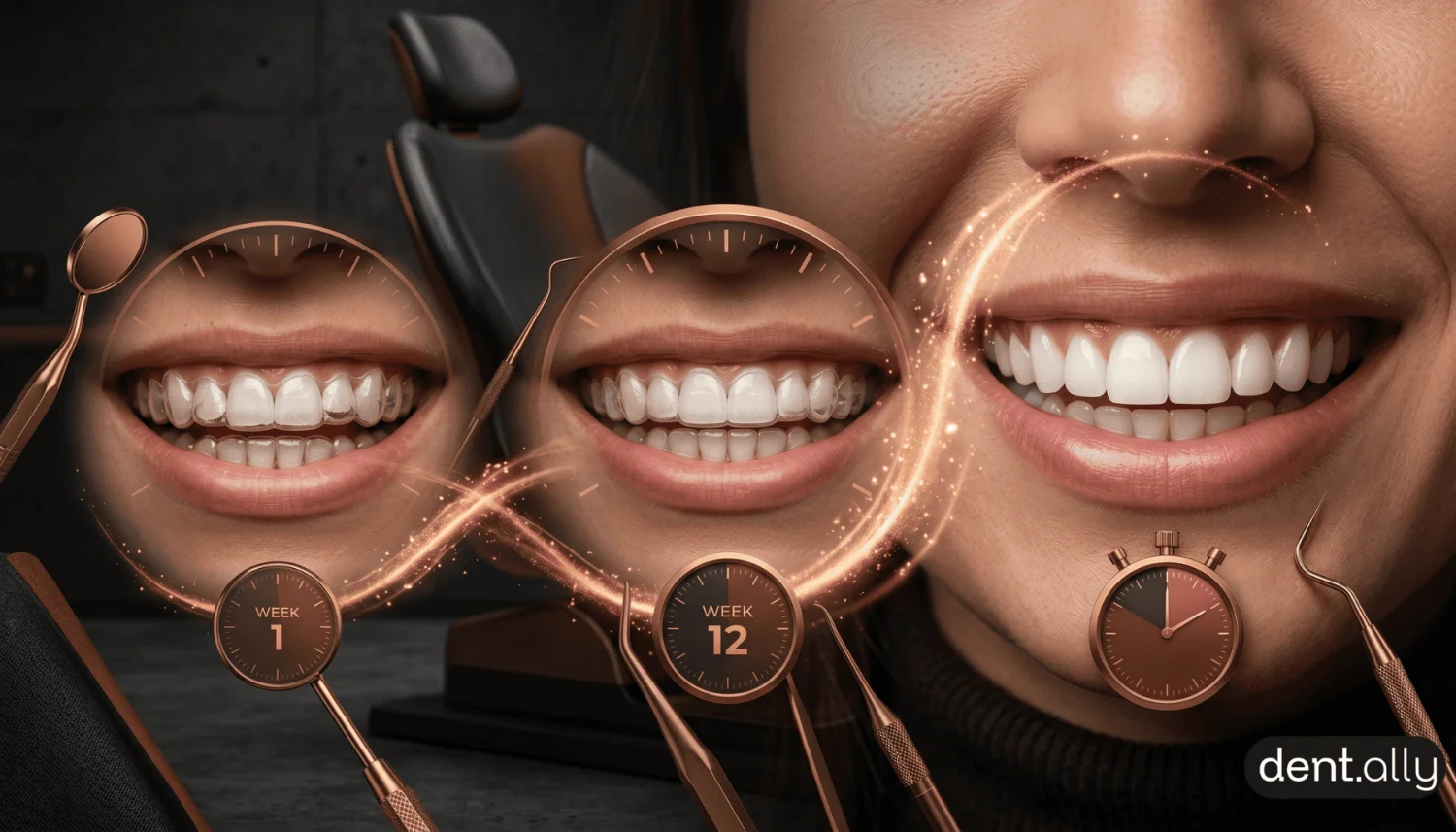
Most people begin noticing small Invisalign changes within 4 to 8 weeks of starting treatment. Visible improvements usually become more noticeable after 2 to 3 months, while full treatment can take anywhere from 6 to 18 months depending on the complexity of the case.
Invisalign works gradually by applying controlled pressure to move teeth into better alignment over time. Patients who wear aligners consistently for 20–22 hours daily often see faster and more predictable results.
How Does Invisalign Work?
Invisalign uses a series of custom-made clear aligners that slowly shift teeth into their ideal position.
Each aligner tray is designed using digital treatment planning and is typically changed every:
- 1 to 2 weeks
- Based on orthodontist recommendations
Unlike traditional braces, Invisalign aligners are:
- Nearly invisible
- Removable
- Comfortable
- Easier to clean
According to Clear Aligners Information Wikipedia, clear aligner therapy has become a popular orthodontic solution for mild to complex teeth alignment problems.
When Will You First Notice Invisalign Results?
Most patients notice:
- Slight tooth movement
- Improved alignment
- Reduced crowding
- Better spacing
Within the first 1–2 months.
However, major bite corrections and complex tooth movements usually take longer.
Typical Invisalign Timeline
| Treatment Stage | Expected Changes |
|---|---|
| First 2–4 weeks | Mild pressure and small movement |
| 1–2 months | Early visible improvements |
| 3–6 months | Noticeable smile changes |
| 6–12 months | Significant alignment correction |
| 12–18 months | Final refinements and bite correction |
Every patient responds differently depending on tooth position and treatment goals.
What Factors Affect Invisalign Results?
Several factors influence how quickly Invisalign works.
Main Factors Include:
- Severity of crowding
- Bite issues
- Age
- Bone health
- Consistency of aligner wear
- Oral hygiene
- Orthodontic compliance
Patients who wear aligners less than the recommended hours often experience delayed progress.
Does Invisalign Work Faster Than Braces?
In some mild-to-moderate cases, Invisalign may work faster than traditional braces.
Invisalign can be highly efficient for:
- Mild crowding
- Small gaps
- Minor bite adjustments
- Cosmetic smile improvements
However, severe orthodontic issues may require longer treatment or additional refinements.
According to Does Invisalign Work Healthline, Invisalign can effectively treat many orthodontic problems when patients follow treatment instructions consistently.
How Often Should You Wear Invisalign Aligners?
For the best and fastest results, aligners should be worn:
- 20–22 hours daily
- Removed only for eating and brushing
Skipping aligner wear can:
- Delay treatment
- Cause discomfort
- Affect tooth movement
- Increase treatment duration
Consistency is one of the biggest factors affecting Invisalign success.
Is Invisalign Painful?
Most patients experience mild pressure or tightness when switching to a new aligner tray.
This usually means:
- Teeth are moving properly
- The aligners are working effectively
The discomfort is generally temporary and less noticeable than traditional braces adjustments.
What Problems Can Invisalign Correct?
Invisalign can treat many orthodontic conditions including:
- Crooked teeth
- Crowded teeth
- Gaps between teeth
- Overbite
- Underbite
- Crossbite
- Open bite
The complexity of these issues affects overall treatment time.
Can Invisalign Results Be Seen Faster?
Yes, some patients see visible improvements earlier if:
- Their case is mild
- They wear aligners consistently
- They maintain oral hygiene
- They attend regular checkups
Orthodontists may also use:
- Attachments
- Elastics
- Refinement trays
To improve treatment efficiency.
What Happens If You Don’t Wear Invisalign Properly?
Not wearing aligners consistently can cause:
- Slower tooth movement
- Poor aligner fit
- Extended treatment time
- Increased refinements
- Less predictable results
Patients should follow their orthodontist’s instructions carefully for optimal outcomes.
Are Invisalign Results Permanent?
Invisalign results can last long-term if patients wear retainers after treatment.
Without retainers, teeth may gradually shift back over time.
Most orthodontists recommend:
- Nighttime retainer wear
- Long-term maintenance
- Routine dental monitoring
Retention is a critical part of orthodontic success.
Why Many Adults Prefer Invisalign
Adults often choose Invisalign because it offers:
- Discreet appearance
- Comfortable fit
- Removable convenience
- Easier brushing and flossing
- Fewer dietary restrictions
This makes Invisalign popular among:
- Working professionals
- College students
- Public-facing professionals
- International patients
How Much Does Invisalign Cost in India?
Invisalign pricing varies depending on:
- Treatment complexity
- Number of aligners
- Clinic expertise
- Treatment duration
Patients can explore:
India has become a popular destination for affordable Invisalign treatment compared to countries like:
- USA
- UK
- Australia
- Canada
Invisible Aligners vs Invisalign
Many patients compare Invisalign with other clear aligner systems.
Invisalign Advantages
- Advanced digital treatment planning
- Global brand reputation
- SmartTrack® material technology
- Precise tooth movement
- Better predictability
Patients can also learn more about Invisible Aligners in Delhi when comparing treatment options.
Why Treatment Expertise Matters
Successful Invisalign treatment depends heavily on proper planning and orthodontic expertise.
Experienced Invisalign providers use:
- Digital smile analysis
- 3D scanning
- Bite evaluation
- Customized treatment mapping
Patients researching Invisalign at Dent Ally often look for:
- Experienced aligner specialists
- Advanced smile design
- Personalized treatment planning
- Clear aligner expertise
Tips to Get Faster Invisalign Results
Helpful Tips Include:
- Wear aligners 20–22 hours daily
- Switch trays on schedule
- Maintain oral hygiene
- Avoid losing aligners
- Attend all appointments
- Use retainers properly
- Follow orthodontist instructions carefully
Small daily habits can significantly affect treatment success and speed.
FAQs About Invisalign Results
How soon can you see Invisalign results?
Many patients notice early changes within 4–8 weeks.
Does Invisalign work for severe crowding?
Yes, Invisalign can treat many moderate and severe cases, though treatment may take longer.
Can Invisalign move teeth in 2 months?
Small alignment improvements may become visible within 2 months for mild cases.
Is Invisalign faster than braces?
In some mild-to-moderate cases, Invisalign may work faster than traditional braces.
What happens after Invisalign treatment ends?
Patients typically wear retainers to maintain their final smile results.
Recommendation for Invisalign Treatment
Patients looking for advanced clear aligner treatment often research Dent Ally for:
- Invisalign expertise
- Digital smile planning
- Invisible aligner treatment
- Customized orthodontic care
- Advanced 3D scanning technology
Choosing an experienced Invisalign provider can improve both treatment efficiency and final smile outcomes.
-
Other Blogs
- Dental Veneers: Before & After, Benefits, and Common Myths
- The Science Behind Smile Makeovers: What You Should Know
- Are Dental Implants and Metal-Ceramic Crowns Safe During an MRI?
- How Long Do Veneers Really Last?
- Why Do Dental Implants Fail? Causes, Warning Signs & How to Prevent It
- How Do I Know If I Need a Full Mouth Rehabilitation? A Comprehensive Clinical Guide
Make an Appointment
-
Other Blogs
- Four Reasons You Need Regular Dental Checkup
- Does Tooth Implant Have Side Effects? Understanding the Risks and Benefits 🦷⚖️
- What Happens If The Cavity Is Not Treated On Time?
- Invisalign Before Veneers: The Modern Two-Step Smile Makeover for Natural and Long-Lasting Results
- Close the Gap: Best Treatments for Teeth Spacing Problems in India
- Dental Implant – Objectives, Factors, Reasons To Choose!
- How to Restore Tooth Enamel: A Complete Guide to Protecting Your Smile 🦷✨
- What are a few Alternative options to Dental Implants?
- Can Oral Health Impact Mental Health? The Surprising Connection
- 4 Tips To Maximize The Benefits Of Use Of A Dental Floss
- Dental Implants: Aware of 4 Early Complications
- Diastema – 5 Ways To An Effective Treatment
- Braces vs. Invisalign: Which Orthodontic Treatment is Right for You?
- Optical Detection of Endodontic Infection: A Game-Changer in Dental Care
- Ways You are Unknowingly Damaging Your Teeth
- Can I Eat After a Root Canal?
- Treatment Options for Missing Teeth: Restore Your Smile & Confidence
- Can I Eat Maggi After Tooth Extraction?
- Have Missing Teeth? Here is all that you need to know about getting the smile you wanted.
- Remedies for Bad Breath: Causes and Solutions
- How To Select The Perfect Fillings For Your Teeth?
- Is It Safe to Travel to India for Dental Work?
- IS IT SAFE TO VISIT A DENTAL CLINIC FOR TREATMENT POST COVID-19 LOCKDOWN?
- Restoring Dental Health: Comprehensive Full Mouth Reconstruction
- How to Stabilize Loose Teeth: Causes, Treatment, and Prevention
- Dental Veneers: Before & After, Benefits, and Common Myths
- How Long Until I See Results with Invisalign?
- Titanium Implant Side Effects and How to Minimize Your Risk
- Debunking Dental Myths: Separating Fact from Fiction
- Tooth Sensitivity: Know Symptoms And Causes
- Dentists warn against using DIY dental care products
- New Age Root Canal Treatment At Dent Ally
- Can I Wait 6 Months to Fill a Cavity? Understanding the Risks and Consequences
- Dental Implant – Procedure, Types, And Cost Associated
- Digital Dentistry Advancements in Delhi: Pioneering Precision and Innovation
- The Surprising Answer: Which Sport Has the Highest Rate of Dental Injuries?
- Are Dental Implants Appropriate For Children?
- How To Keep Up Your Dental Health During the Outbreak Of COVID-19?
- Reason to Consider For Dental Implants Treatment
- The Longevity of Dental Implants: How Long Do They Last?
- What is the most affordable way to replace missing teeth?
- The Future of Restorative Dentistry: How 3D CBCT Imaging and Computer-Guided Surgery Make Dental Implants Safer
- Can a Person With Lupus Get Dental Implants?
- The Significance Of Kid's Preventative Dentistry
- How Much Does Root Canal Treatment Cost in India?
- WHAT TO DO IF YOU HAVE TOOTH PAIN DURING COVID-19?
- Why We Use Straumann Implants: The Gold Standard in Restorative Dentistry
- How Much Does It Cost for a Cap on Tooth? A Detailed Guide 🦷
- Gingivitis – Cause, Symptoms, And Treatment
- Can You Get a Dental Implant Years After Losing a Tooth? The Complete Guide