


What Is A Dental Black Triangle? Causes And Treatments
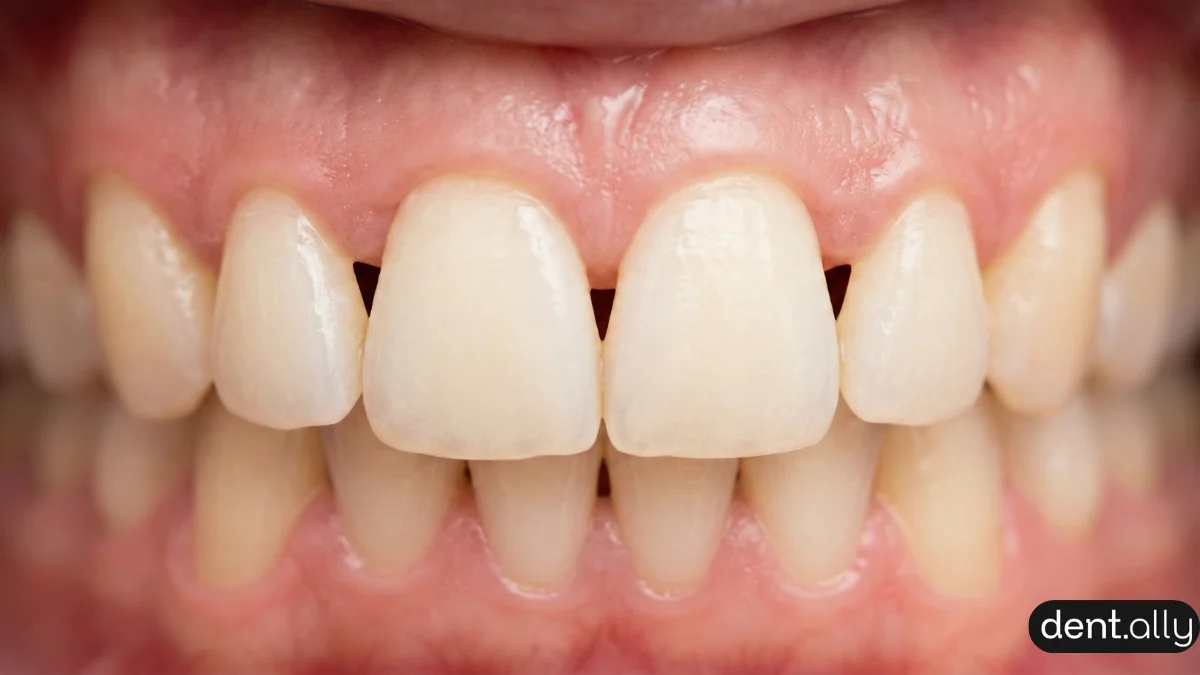
A healthy, confident smile is something we all strive for. We brush, we floss, we invest in whitening treatments, and many of us undergo years of orthodontic work just to get our teeth perfectly aligned. But sometimes, even with perfectly straight and white teeth, you might look in the mirror and notice something distracting: tiny, dark spaces between the bases of your teeth.
These small gaps look like little dark wedges pointing downwards toward your gums. In the dental world, these are clinically known as open gingival embrasures, but they are most commonly referred to by patients and dentists alike as dental black triangles.
If you have noticed these dark spaces forming in your smile, you are certainly not alone. They are a widespread cosmetic and functional concern. Not only can they make you feel incredibly self-conscious, often aging your smile prematurely, but they can also physically trap food, harbor dangerous plaque, and even affect your speech by allowing air to whistle through your teeth when you speak.
In this comprehensive, in-depth guide, we are going to explore absolutely everything you need to know about this condition. We will uncover exactly what causes black triangle teeth, thoroughly debunk myths about a black triangle teeth home remedy, detail the modern clinical solutions available, and answer the burning question on your mind: can you fix black triangles between teeth?
Understanding the Anatomy: Are Black Triangles Between Teeth Normal?
Before we dive into the specific causes and fixes, it helps to intimately understand the anatomy of a healthy smile. In a youthful, perfectly healthy mouth, the teeth fit snugly together, and the space between them at the gumline is completely filled with a firm, pink, triangle-shaped piece of gum tissue. Dentists call this specific tissue the interdental papilla.
So, are black triangles between teeth normal?
The candid and medically accurate answer is: they are very common, but they are not the anatomical ideal. Studies suggest that up to 30% of adults develop these spaces at some point in their lives. While a small black triangle might not immediately threaten the life or stability of your tooth, it is usually a clinical sign that something within the micro-environment of your mouth has changed. The papilla has receded, the underlying bone has shrunk, or the teeth themselves have shifted position.
While you shouldn't panic if you see one, you also shouldn't ignore it. Recognizing that the interdental papilla has receded is the very first step in protecting your long-term oral health and restoring the pristine aesthetics of your smile.
The Root of the Problem: What Causes Black Triangle Teeth?
The interdental papilla is an incredibly delicate type of tissue. It relies entirely on the underlying jawbone for its structural support. If the bone drops, the gum drops right along with it. If the teeth move, the gum has to adapt to the new spacing. Here is a detailed breakdown of exactly what causes black triangle teeth:
1. Gum Disease (Periodontitis)
This is undeniably the leading culprit worldwide. When plaque and tartar are allowed to build up along the gumline, bacteria trigger a chronic inflammatory response from your immune system. The gums become red, swollen, and eventually pull away from the teeth. As periodontal disease advances, it attacks the underlying jawbone. Because the gum tissue relies on the bone for its scaffolding, bone loss directly results in the blunting and loss of the interdental papilla, leaving a dark, empty void behind.
2. Aggressive Brushing Habits
You might logically think that brushing harder means getting your teeth cleaner, but aggressive brushing is incredibly destructive to oral tissues. Using a hard-bristled toothbrush or applying too much physical pressure traumatizes the delicate gum tissue. Over time, this daily mechanical wear and tear literally scrubs the gums away, causing them to recede, exposing the roots of the teeth, and creating those dreaded black triangles.
3. The Orthodontic Paradox (Braces and Invisalign)
Many patients are absolutely shocked to discover black triangles after they get their braces off or finish their clear aligner therapy. When teeth are severely crowded or overlapping, the gum tissue between them is squished, inflamed, and blunted over time. When the orthodontist perfectly straightens those teeth, they spread out, revealing that there simply wasn't enough healthy gum tissue left to fill the new, correct space. Additionally, if the teeth are highly triangular in shape, straightening them will naturally leave a gap at the bottom where the roots taper inward.
4. Natural Tooth Shape
Look closely at the anatomical shape of your teeth in the mirror. Some people have rectangular or square teeth that are the exact same width at the biting edge as they are at the gumline. These teeth fit flush against each other from top to bottom. Other people naturally have highly triangular or tapered teeth. Because triangular teeth only touch at the very top (the contact point), there is a natural, wider gap at the gumline. If the gum tissue is even slightly thin or recessed, a black triangle will be immediately visible.
5. Age and Tissue Thinning
As we get older, our bodies naturally lose collagen, and our soft tissues thin out. This systemic change includes the gingival tissue in our mouths. Even without active gum disease or aggressive brushing habits, the natural aging process can cause a slight, gradual recession of the papilla, leading to the appearance of dark spaces as we enter our later decades.
6. Bone Loss from Missing Teeth
If you have had a tooth extracted and did not promptly replace it with a dental implant, the bone in that area begins to resorb (melt away) due to a lack of stimulation. This localized bone loss can severely affect the adjacent teeth, causing the gum tissue on the sides of those perfectly healthy teeth to collapse and sink, forming dark triangles.
Can You Fix Black Triangles Between Teeth?
If you are looking in the mirror feeling frustrated by these dark gaps, there is highly encouraging news. Can you fix black triangles between teeth? Absolutely.
Modern cosmetic and restorative dentistry has evolved dramatically in the last decade. In the past, dentists often told patients they just had to live with these spaces, as gum tissue is notoriously difficult to predictably regrow. Today, there are highly effective, minimally invasive cosmetic and structural treatments that can completely erase these gaps, restoring a youthful, seamless, and confident look to your smile.
Fixing them is not just about vanity, either. Closing these gaps functionally prevents food from becoming aggressively impacted between your teeth, which drastically lowers your risk of localized decay and recurrent gum inflammation in the future.
Clinical Solutions: Treatment for Black Triangle Teeth
The absolute best treatment for black triangle teeth depends heavily on the underlying cause, the size of the gap, the health of your bone, and your financial budget. Here are the most effective professional solutions available in top dental clinics today.
1. The Bioclear Method (Advanced Injection Molded Bonding)
For the vast majority of patients today, the Bioclear method has become the gold standard for treating black triangles. Traditional dental bonding (where a dentist free-hands composite resin onto the tooth) often falls short for black triangles because it can create a rough, overlapping ledge that traps plaque, making the underlying gum issue even worse.
Bioclear uses specialized, clear, anatomically tooth-shaped matrices (molds) that slide gently just under the gumline. The dentist then injects heated, medical-grade composite resin into the mold. It wraps completely around the tooth, effectively changing its shape from triangular to square, and fills the black space perfectly from the root up.
-
The Benefit: It is incredibly minimally invasive (no drilling of your natural, healthy tooth structure is required), it is highly stain-resistant, and it leaves a glass-like finish that is biologically healthy for the gums to rest against.
-
The Result: When you look at black triangle teeth before and after photos of the Bioclear method, the results are genuinely staggering. The dark voids disappear entirely, and the smile looks instantly fuller, younger, and healthier.
2. Porcelain Veneers or Dental Crowns
If your teeth have other significant cosmetic issues in addition to the triangles—such as severe discoloration, extensive chips, or large, failing old fillings—porcelain veneers or crowns might be the most comprehensive route. A veneer is a thin shell of custom-made porcelain permanently bonded to the front of the tooth. The cosmetic dental lab can expertly design the veneers to be slightly wider at the gumline than your natural teeth, physically closing the dark space.
-
The Benefit: Veneers offer a complete, flawless smile makeover, allowing you to completely change the color, shape, and size of your teeth while simultaneously closing the triangles.
-
The Drawback: This requires the dentist to shave down a portion of your natural healthy enamel to make room for the porcelain, making it a permanent, irreversible lifelong commitment.
3. Orthodontic Treatment with IPR (Interproximal Reduction)
If your black triangles are strictly the result of highly tapered (triangular) teeth, your dentist or orthodontist might creatively use a technique called Interproximal Reduction (IPR) combined with clear aligners like Invisalign. During IPR, the dentist uses a specialized, ultra-fine polishing strip to gently file away a microscopic amount of enamel from the sides of the teeth, slightly flattening the contact points. The aligners then systematically push the teeth closer together. By bringing the flattened sides together, the black triangle at the bottom is squeezed completely shut.
4. Pink Porcelain or Gingival Masks
For older patients with severe periodontal bone loss and massive black triangles where using white composite would make the teeth look unnaturally long, "horse-like," and blocky, dentists have another trick. They can use "pink porcelain." This is composite or ceramic material matched perfectly to the exact shade of your gums, placed strategically at the base of the restoration to hide the gap. Alternatively, a removable, flexible silicone mask (a gingival veneer) can be custom-made to snap snugly over the teeth and physically cover the gaps during the day.
5. Gum Grafting and Tissue Engineering
If the black triangle is purely the result of superficial gum recession (and the underlying bone peak is still relatively intact), a periodontist may attempt a surgical gum graft. This involves taking a small piece of tissue from the roof of your mouth and meticulously stitching it into the recessed area. However, it is vitally important to note that grafting the interdental papilla (that specific tiny peak of tissue between teeth) is one of the most unpredictable and difficult surgeries in all of dentistry due to the extreme lack of blood supply in that tiny, isolated area.
Financial Considerations: Black Triangle Teeth Fix Cost
Because there is simply no one-size-fits-all solution, the black triangle teeth fix cost varies wildly based on the treatment method chosen, the number of triangles being closed, the expertise of the doctor, and your geographic location.
-
Orthodontics (IPR + Aligners): If you are already undergoing a full Invisalign treatment, closing the triangles might be included in your comprehensive plan. If done solely for the triangles, minor aligner therapy can range from $1,500 to $4,000.
-
Bioclear / Injection Molded Bonding: This is often the most highly recommended and cost-effective direct treatment. It typically ranges from $300 to $800 per tooth. Keep in mind that cleanly closing one triangle usually requires adding composite material to both adjacent teeth that form the gap.
-
Porcelain Veneers: This is the most premium, expensive route. High-quality, lab-crafted porcelain veneers typically range from $1,000 to $2,500+ per tooth.
Note: The cosmetic closure of black triangles is rarely covered by standard dental insurance, as it is largely considered an elective aesthetic procedure. However, treatments for any underlying gum disease that caused the triangles will typically be covered.
The Truth About DIY: Is There A Black Triangle Teeth Home Remedy?
The internet is absolutely flooded with "hacks," TikTok trends, and natural wellness blogs claiming you can cure receding gums and close gaps from the comfort of your own bathroom. It is time for some absolute medical candor regarding a black triangle teeth home remedy.
You cannot regrow lost gum tissue or bone with a home remedy. Period. Once the interdental papilla is gone and the bone has shrunk, no amount of oil pulling (swishing coconut oil), brushing with turmeric or baking soda paste, rubbing aloe vera gel on your gums, or drinking green tea will make that physical tissue magically grow back to fill the void.
In fact, attempting aggressive DIY remedies—like brushing with highly acidic lemon juice or heavily abrasive activated charcoal—will only strip your protective enamel and severely irritate your gum tissue, guaranteeing that the recession and the triangles become much worse.
The only effective "home remedy" for black triangles is preventive maintenance—halting the active disease process so the triangles do not get any larger than they already are. To physically close a gap that already exists, you must rely exclusively on the structural and clinical solutions provided by a licensed dentist.
Proactive Care: How To Prevent Black Triangles Between Teeth
If you have noticed a tiny dark space just beginning to form, or if you want to ensure your current orthodontic treatment doesn't leave you with unexpected gaps, prevention is your absolute best defense. Here is a definitive guide on how to prevent black triangles between teeth:
1. Master Your Flossing Technique
Flossing isn't just about dislodging that piece of spinach from lunch; it is about disrupting the sticky, acidic bacterial biofilm that destroys your gums and bone. However, "snapping" the floss down hard into the gums can actually slice the delicate papilla and cause mechanical recession. The right way: Gently slide the floss between the teeth. Wrap it securely into a "C-shape" around the base of one tooth, slide it gently just under the gumline, and wipe upward to pull the plaque out. Repeat this motion on the adjacent tooth.
2. Switch to an Ultra-Soft Toothbrush Today
Throw away your medium or hard-bristled toothbrushes immediately. They are doing microscopic, cumulative damage to your gums every single day. Switch to an ultra-soft manual brush, or better yet, invest in a pressure-sensing electric toothbrush that actively alerts you when you are pressing too hard. Let the vibrating bristles do the work, not your arm muscles.
3. Treat Gum Disease Early and Aggressively
Do not ever ignore bleeding gums. Bleeding is a glaring sign of open wounds and active bacterial infection in your mouth. Visit your dentist for professional, thorough cleanings every 6 months without fail. If you are diagnosed with gingivitis or periodontitis, adhere strictly to the deep cleaning (scaling and root planing) schedule your hygienist recommends to stop bone loss dead in its tracks.
4. Discuss IPR Before Starting Braces
If you are actively planning to get braces or clear aligners, have a frank, detailed discussion with your orthodontist beforehand. Ask them to explicitly evaluate your tooth shape. If you have highly triangular teeth, ask if Interproximal Reduction (IPR) is factored into your treatment plan to actively prevent black triangles from appearing as the teeth align into their new positions.
5. Quit Smoking and Vaping
Nicotine acts as a powerful vasoconstrictor, meaning it chokes off the vital blood supply to your body's extremities—including the tiny, fragile blood vessels inside your gums. Without proper, robust blood flow, the interdental papilla cannot fight off everyday bacterial infections and will rapidly, inevitably recede.
Conclusion: Reclaiming Your Seamless Smile
Dental black triangles can be incredibly frustrating. They inexplicably draw the eye, artificially age your smile, and turn eating into a constant, annoying battle with toothpicks. However, understanding that they are a very common structural issue—driven by bone loss, tissue thinning, or simple tooth shape—removes the mystery and anxiety, allowing you to take definitive action.
While you cannot reverse the loss of gum tissue with a homemade paste or wishful thinking, the world of modern restorative dentistry has never been more equipped to help you. From the minimally invasive brilliance of the Bioclear bonding method to the transformative, permanent power of porcelain veneers, you absolutely do not have to live with dark spaces in your smile. By maintaining impeccable, gentle oral hygiene at home and partnering with a skilled cosmetic dentist, you can protect the foundation of your teeth, close those gaps, and project a flawless, seamless smile to the world.
-
Other Blogs
- Dental Veneers: Before & After, Benefits, and Common Myths
- The Science Behind Smile Makeovers: What You Should Know
- Are Dental Implants and Metal-Ceramic Crowns Safe During an MRI?
- How Long Do Veneers Really Last?
- Why Do Dental Implants Fail? Causes, Warning Signs & How to Prevent It
- How Do I Know If I Need a Full Mouth Rehabilitation? A Comprehensive Clinical Guide
Make An Appointment
-
Other Blogs
- 😁 Dent Ally Aligners vs Invisalign: Which Should You Choose?
- Understanding the Genetic Factors Behind Oral Health Issues: 10 Conditions to Know
- Does Tooth Implant Have Side Effects? Understanding the Risks and Benefits 🦷⚖️
- Dental Implants: Need and Safety
- The Connection Between Oral Health and Overall Well-being
- The Art of Smile Transformations: Crafting Stunning Smile Makeovers at Dentally.in
- Dental Veneers: Before & After, Benefits, and Common Myths
- The Hidden Power of a Professional Teeth Cleaning: Why Your Smile Needs More Than Just Brushing
- How Long Do Veneers Really Last?
- Managing a Sore Throat Caused by Allergies: Effective Strategies for Relief
- Missing Teeth Problem and Its Treatment
- Can I Fly to India Just for Dental Implants?
- Want healthy teeth and gum? Include these Foods in your diet
- The New Era of Dentistry: AI, 3D Imaging & Digitally Guided Dental Implants
- Gingivitis – Cause, Symptoms, And Treatment
- How much does full mouth rehab cost in India?
- Can 1 implant support two teeth?
- Elevating Smiles: Exploring the Diverse Advantages of Dental Implants
- Misconception About Kid's Dental Health
- Why India is the Best Destination for Full Mouth Dental Implants
- Mastering Oral Hygiene: A Comprehensive Guide to Healthy Teeth and Smiles
- The Role of Genetics in Dental Health: Understanding Your Oral Health Risks
- How to Fix Broken Teeth: A Comprehensive Guide
- Got the biggest solitaire but still feel something is missing?
- Can Dental Problems Cause Headaches?
- The Ultimate Guide: Which Dental Offices Provide Dental Implant Services in My Area?
- The ABCD's of a Child's Teeth
- Smile Alignment Made Easy: How to Straighten Your Teeth in India
- Advanced Bioclear Treatment in Delhi NCR – A Minimally Invasive Smile Makeover
- Do’s and Don’ts Post Root Canal Treatment, Best Root Canal Treatment in Delhi
- 🇦🇺 Dent Ally Reviews: What Australian Patients Say About Dental Implants in India
- 7 Dental Specialties You Should Know
- The Benefits of Dental Implants
- How To Get Rid of Sensitive Teeth
- Invisalign for crooked teeth
- Dentist for Pregnant Women Near Me: Why Dental Care During Pregnancy is Crucial
- How Teeth Deep Cleaning Prevents Severe Gum Disease
- My Adult Tooth is Loose! What Should I Do? A Dentist's Emergency Guide
- TOP REASONS WHY DENTAL IMPLANTS ARE IMPORTANT?
- Dental Implant – Procedure, Types, And Cost Associated
- Seeing Black Lines on Your Teeth? It Might Not Be a Cavity. A Dentist Explains.
- 🦷 How Oral Health Affects Your Well-Being: 6 Reasons Why Good Dental Care Matters
- Effective Practices To Keep Your Teeth Healthy
- Dr. Shashi Bhushan Gupta of Dent Ally Recognized Among the "Best Dentists in Delhi" by ClinicSpots
- What is the most affordable way to replace missing teeth?
- Gurgaon- best place to get your dental procedures done.
- Restoring Dental Health: Comprehensive Dental Restorations
- How Much Does It Cost to Fill the Gap in Your Teeth? 🦷💸
- Nurturing Healthy Smiles: The Power of Positive Habits for Dental Wellness
- How painful is getting a dental implant?