



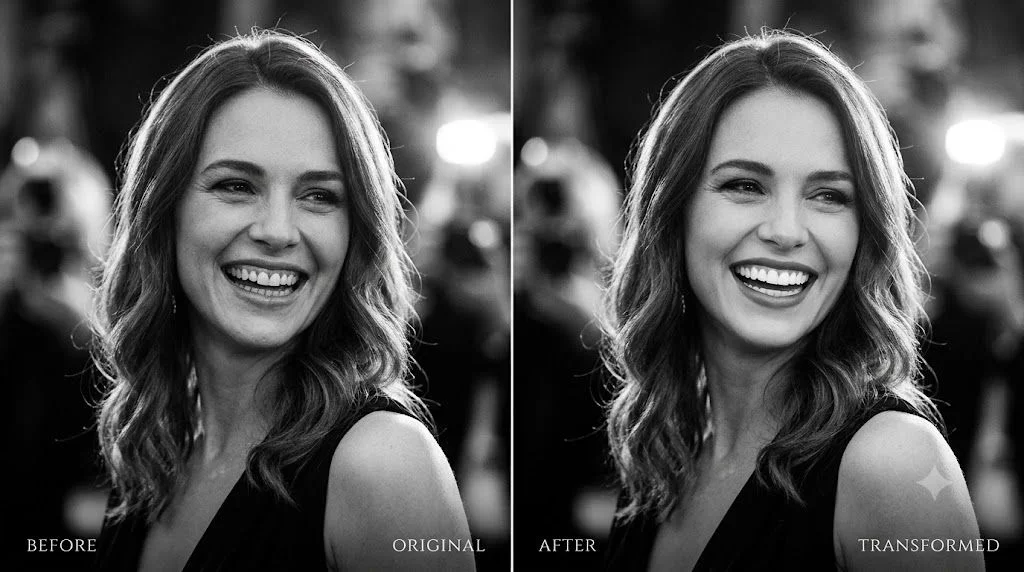
Why do celebrity smiles change over time?
Teeth and smiles don't stay exactly the same throughout life. Tooth colour shifts with staining, wear and natural ageing. Teeth can move gradually, and changes in the soft tissues of the face affect how much of the teeth show when someone smiles.
With celebrities, these changes are easier to spot because there are years of photos and videos to compare. Public figures may also choose cosmetic treatment for personal or professional reasons.
But unless a celebrity has publicly said what they've done, nobody outside can know. So rather than guessing at someone's dental history, it's more useful to understand what treatments can change a smile.
01 Teeth whitening: a subtle change you can still notice
Sometimes teeth don't need reshaping or straightening. They just look darker than the person would like. Coffee, tea, tobacco, ageing and a few other things can all cause discoloration.
Professional teeth whitening uses bleaching agents to lighten suitable natural teeth. First, a dentist checks what's causing the discoloration, whether you have fillings or crowns, and whether your teeth and gums are healthy enough for treatment.
What can whitening change? It can lighten the shade of natural teeth, although how much varies from person to person. It can't straighten teeth, close gaps or change the shape of a tooth, and existing crowns, veneers and tooth-coloured fillings won't whiten the way natural enamel does. It can also cause temporary sensitivity, so it's not something to approach casually.
02 Dental veneers: changing shape, colour and proportions
Veneers come up whenever people talk about celebrity smile makeovers. So what are they? A dental veneer is a thin covering placed over the front surface of a tooth. They may be considered for stubborn discolouration, minor chips, irregular shapes or certain gaps. Porcelain and composite are the two common materials, and a dentist can customise the shade and shape to blend with the teeth around them.
Do veneers look artificial? Not necessarily. Well-planned veneers can look very natural. It depends on how the tooth is prepared, the material, the proportions, the shade, and the skill that goes into designing and placing them.
But veneers aren't right for everyone. Many procedures involve removing some natural enamel, which makes the treatment irreversible. Veneers can also chip, come loose or need replacing over time. That's why they shouldn't be treated as an automatic route to a celebrity-style smile.
03 Clear aligners and braces: changing tooth alignment
Not every smile transformation changes the surface of the teeth. Sometimes the issue is where the teeth sit. Crowding, spacing and certain bite problems can affect how a smile looks and works.
Braces or clear aligners gradually move teeth into planned positions. Aligners have become popular with adults who want a removable, less noticeable option than fixed braces, and Dent Ally's guide to Invisalign walks through what treatment involves.
They aren't suitable for every orthodontic problem, though. Treatment can take months or longer depending on the case, and you'll usually need retainers afterwards to hold the result. The aim should be healthy alignment and a working bite, not straight teeth at any cost.
04 Composite bonding: small changes without a full makeover
Imagine someone who's generally happy with their smile but has one slightly chipped front tooth. They probably don't need veneers across several teeth. Composite bonding could be an option.
In bonding, a dentist applies tooth-coloured resin to repair or reshape the tooth. It can help with small chips, minor gaps and some uneven edges, and it can often be done with limited changes to the natural tooth.
Bonding isn't permanent, though. The material can stain, wear or chip over time and may need polishing, repair or replacing. For minor concerns, it's still worth considering before anything more extensive.
05 Gum contouring: when the gums shape the smile
Teeth aren't the only thing that decides how a smile looks. The position and shape of the gums matter too. Some people naturally show more gum when they smile, and others have uneven gum margins.
In selected cases, gum contouring may be considered to adjust the gum line. But not every uneven gum line needs treatment. Before recommending anything, a dentist needs to assess gum health, tooth position and the amount of supporting tissue. Looks should never come at the cost of healthy gums or tooth support.
06 Dental crowns: restoring damaged teeth
Crowns sometimes feature in smile transformations, but their job is different from a veneer's. A crown covers the whole tooth and may be recommended when a tooth is badly weakened, fractured, heavily restored or otherwise needs protection. Modern tooth-coloured crowns can also improve how a restored tooth looks.
But a crown means preparing the tooth underneath, so it isn't usually the first choice for a healthy tooth with a small cosmetic concern. Keeping as much natural tooth as possible still matters.
Which treatment can change your smile?
Here's a simple comparison of common options.
| Dental concern | Treatment that may be considered |
|---|---|
| Yellowing or certain tooth stains | Professional whitening |
| Minor chips or uneven edges | Composite bonding |
| Crowded or misaligned teeth | Braces or clear aligners |
| Certain gaps, shape concerns or persistent discolouration | Veneers |
| Uneven gum margins | Gum assessment and, in selected cases, contouring |
| Heavily damaged or weakened teeth | Dental crowns or other restorative care |
The right choice depends on the underlying cause, your oral health, your bite and your preferences. More than one option may suit you.
What happens during a personalised smile makeover?
A proper smile makeover doesn't start with picking the whitest shade on a chart. It starts with a conversation. What bothers you about your smile? Is it something you've noticed for years, or something that's only started to bother you recently?
Then a dentist examines your teeth, gums and bite. Photos, scans and digital smile-planning tools can help show what might change. At Dent Ally, digital smile design is part of the clinic's cosmetic dentistry approach, so proposed tooth proportions and smile aesthetics can be discussed before treatment begins.
Still, a preview is a planning aid, not a promise of an identical final result. A good plan should explain what's possible, what isn't necessary, and what long-term upkeep may involve.
Do you need a complete smile transformation?
Not everyone does. If you like your natural smile but want to fix one small thing, a focused treatment may suit you better than a full makeover. And if your teeth and gums are healthy and you're happy with how they look, there's no need to change them just because a certain smile style is trending. Cosmetic dentistry is a personal choice.
Frequently Asked Questions
1. How do celebrities transform their smiles?
Smile appearance can change through orthodontics, whitening, bonding, veneers, crowns or other dental treatment. A celebrity's actual treatment history can't be confirmed from photographs alone.
2. Can veneers completely change a smile?
In suitable cases they can noticeably change visible tooth shape, shade and proportions. They don't fix every bite or alignment issue, and they may need irreversible enamel removal.
3. How long does a smile makeover take?
It depends on the treatments. Some bonding can be done in a single appointment, veneers usually need several visits, and orthodontic treatment can take months or longer.
4. Is a smile makeover painful?
Comfort varies by treatment. Some procedures need local anaesthesia, and others may bring temporary sensitivity or discomfort. Your dentist can explain what to expect, and you can contact the Dent Ally team with questions before you start.
5. Are smile transformations permanent?
No cosmetic treatment should be assumed to last forever. Restorations may need repair or replacement, whitening results can fade, and orthodontic results need retention.
6. What is the most natural-looking way to improve a smile?
It depends on your teeth and the concern. Sometimes a small repair or a professional clean is enough. Other cases benefit from a carefully planned combination of treatments.