



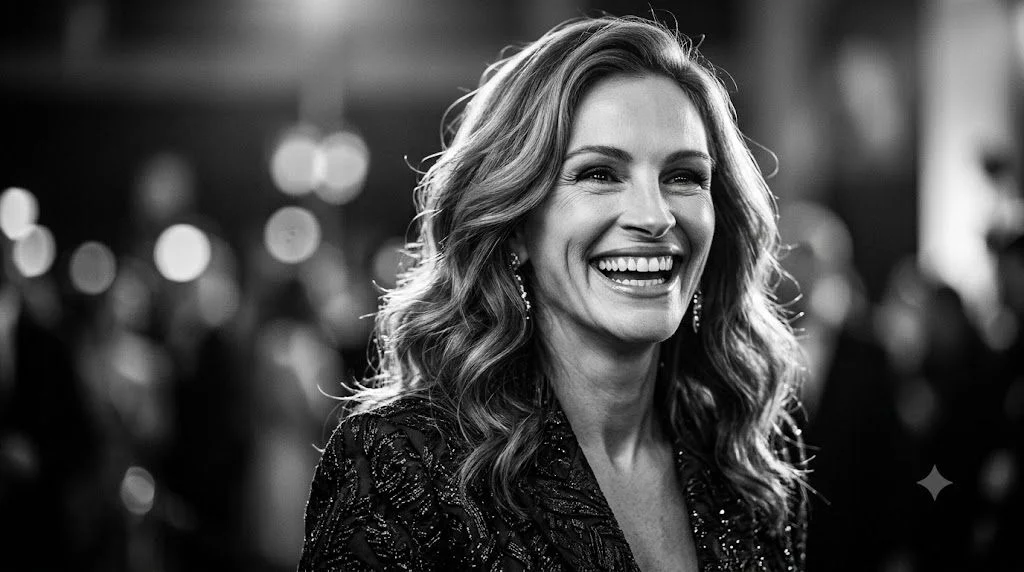
01 Tooth shape changes the feel of a smile
Look closely at two different smiles. One person might have slightly rounded front teeth, while another has straighter, more defined edges. Neither is automatically more attractive.
Rounded edges tend to give a softer look, and more angular edges can look sharper. The size of the front teeth matters too. If they're much larger or smaller than the teeth around them, the smile can look a little off balance.
But the goal isn't to make every tooth identical. Natural teeth come in different shapes and sizes, and those small differences are what make a smile look real. It's one reason good smile design starts with your own proportions.
02 Symmetry matters, but perfect symmetry isn't everything
We often hear that attractive smiles are symmetrical. There's some truth in that, since balance between the left and right sides can look pleasing. But a smile doesn't need to be mathematically perfect.
A slight difference in tooth position, or the way one side of the mouth lifts, is hardly noticeable when someone is talking or laughing.
A study of celebrity smiles in The Journal of Prosthetic Dentistry found that many celebrities known for attractive smiles shared certain aesthetic features, but not all of them had perfectly centred dental midlines. It's a handy reminder that smile aesthetics can't be reduced to a single measurement.
03 A natural tooth colour often looks better
When people think of celebrity smiles, bright white teeth usually come to mind first. But natural teeth aren't flat white. They have subtle variations in shade and translucency, and the tips can look a little different from the area near the gums. Those small differences are what make teeth look natural.
Very opaque or uniformly white teeth can look less realistic, depending on the person's features. Professional teeth whitening can lighten certain kinds of discolouration, but not every stain responds in the same way. The American Dental Association also notes that whitening doesn't change the colour of existing tooth-coloured restorations, and it may cause temporary sensitivity.
A healthy, natural-looking shade is usually a better goal than the brightest white you can get.
04 The smile line plays a bigger role than you'd think
Here's something you may not have noticed. When many people smile, the edges of their upper front teeth form a gentle curve. Dentists call this the smile arc, or smile line. When that curve follows the lower lip nicely, the smile tends to look harmonious.
Other details count as well, such as how much of the upper teeth show when you smile and how your lip moves across them. These vary naturally from person to person. A dentist may look at them when planning veneers, crowns or changes to tooth shape.
05 Gums are part of the smile too
When we talk about an attractive smile, we usually mean teeth. But gums shape the overall look as well. Some people show very little gum when they smile, and others naturally show more. Neither is automatically a problem.
Dentists may check gum health, contour and symmetry when someone is thinking about cosmetic treatment. But changing a gum line isn't always necessary, and healthy gums shouldn't be altered just to follow a trend without weighing the risks and benefits.
06 The most memorable smiles match the face
Imagine picking a hairstyle without thinking about your face shape. It might look wonderful on someone else and feel completely wrong on you. Smile design works in a similar way.
The size and shape of your teeth need to suit your lips, jaw, facial proportions and natural expressions. A broad smile might look great on one person, while a softer, narrower one suits another. That's why copying a celebrity's teeth exactly is rarely a good idea. A good smile should look like it belongs to the person wearing it.
07 Expression makes a smile feel genuine
Think of a photo of someone laughing with friends. You're probably not studying the size of their teeth. You're noticing the expression.
A natural smile involves more than moving the lips. The cheeks and the muscles around the eyes also shape how the expression comes across. That's part of why celebrities like Julia Roberts and Madhuri Dixit are so memorable: their smiles are tied up with the way they express themselves.
Even perfectly aligned teeth may not leave an impression if the smile looks uncomfortable or forced.
08 Confidence changes how a smile is expressed
Someone who feels self-conscious about their teeth might smile with closed lips, or cover their mouth when they laugh. Someone who feels at ease tends to smile more freely.
That doesn't mean people with different dental appearances are less confident, or that changing your teeth will automatically boost self-esteem. But if a particular concern is affecting you, it can be worth talking to a dentist about it. Sometimes the answer is simpler than you expect: a cleaning, a minor repair, or reassurance that a natural variation needs no treatment at all.
Can you make your smile more attractive?
There's no universal formula, and you don't necessarily need cosmetic treatment. Start with the basics: consistent oral hygiene, regular dental care, and keeping an eye on any changes in your teeth or gums.
If there's something specific you'd like to change, a dental consultation can help you work out suitable options. Depending on your needs, these might include whitening, bonding, orthodontic treatment, veneers or other appropriate care. What matters is choosing treatment for the right reasons and knowing what it can realistically achieve.
Frequently Asked Questions
1. What is the most important feature of an attractive smile?
There isn't a single one. Tooth proportions, gum health, colour, smile line, facial harmony and natural expression all play a part.
2. Are perfectly straight teeth necessary for a beautiful smile?
No. Mild differences in alignment are common, and many attractive smiles have distinctive features. If you'd still like to change yours, you can read about clear aligners at Dent Ally.
3. What is the golden ratio in smile design?
The golden ratio is a mathematical proportion sometimes used as a reference in dental aesthetics. It can be a useful guide, but it isn't a universal rule for creating attractive smiles.
4. Does teeth whitening make a smile more attractive?
It can improve certain types of discolouration, but a beautiful smile depends on far more than tooth colour. Whitening should be chosen after an assessment of your dental health and suitability.
5. Why do some smiles look more natural than others?
Natural-looking smiles tend to have proportions, shades and tooth shapes that suit the person's face, along with the normal small variations found in real teeth. Have a question about your own? You can contact the Dent Ally team.
Beauty isn't always about perfect teeth
The smiles we remember most aren't necessarily the ones that follow every aesthetic guideline. They're the ones that belong naturally to someone's face.
Dentistry can help improve parts of a smile when needed, but it shouldn't remove everything that makes it yours. If you'd like to understand the features of your own smile, the cosmetic dentistry team at Dent Ally can assess your teeth, gums, bite and facial proportions and talk through what may suit you.