


Different Types of Braces and their Costs

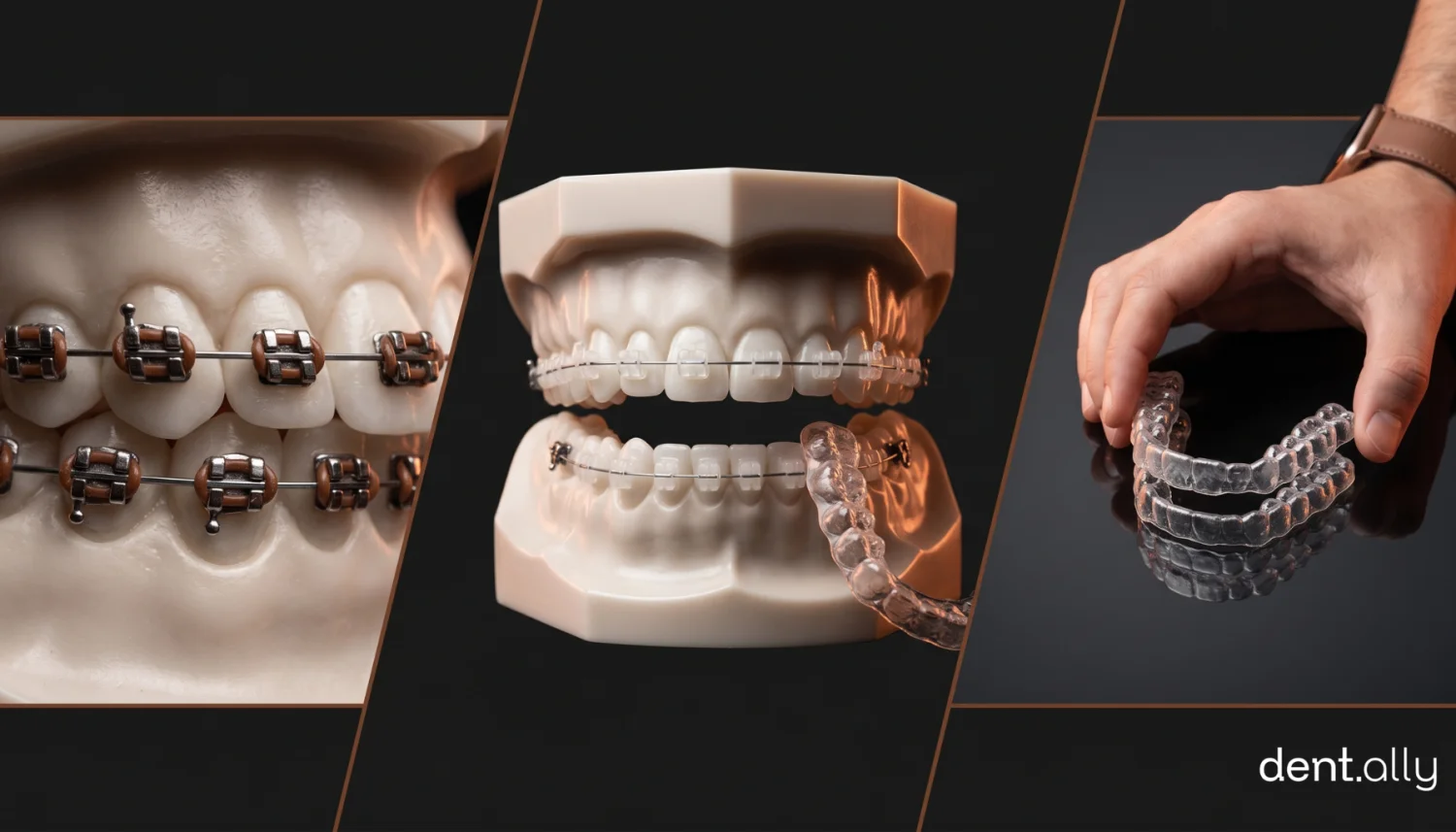
Braces Cost in India: Types, Ceramic Braces Price and Comparison
Braces in India cost about ₹25,000 to ₹60,000 for metal, ₹45,000 to ₹90,000 for ceramic, and ₹80,000 or more for clear aligners. Lingual braces cost the most. The final price depends on the type you choose and how complex your case is.
Table of Contents
- Quick Reference: Braces Cost in India by Type
- Ceramic Braces Cost in India
- Types of Braces and What They Cost
- 1. Metal Braces
- 2. Ceramic Braces
- 3. Self-Ligating Braces
- 4. Lingual Braces
- 5. Clear Aligners
- What Is the Right Age for Braces?
- What Affects Braces Cost, and What Is Included
- Frequently Asked Questions
- Book an Orthodontic Consultation at Dent Ally
This guide covers each brace type with its pricing, examines what ceramic braces cost across India, and outlines what determines the final bill. For the treatment process itself, visit the orthodontic braces page.
Quick Reference: Braces Cost in India by Type
Pricing is based on materials and case difficulty. Standard ranges are listed below:
| Type of Braces | Typical Cost Range (INR) | Best For | Visibility |
|---|---|---|---|
| Traditional Metal Braces | ₹25,000 - ₹60,000 | Budget-conscious, complex cases | High |
| Ceramic Braces | ₹45,000 - ₹90,000 | Aesthetics on a budget | Medium (Tooth-colored) |
| Self-Ligating Braces | ₹50,000 - ₹1,20,000 | Fewer elastic ties, easier cleaning | Medium to High |
| Clear Aligners | ₹80,000 - ₹3,50,000 | Adults, frequent travellers | Nearly Invisible |
| Lingual Braces | ₹1,00,000 - ₹4,00,000 | Maximum discretion | Hidden from the front |
These are typical private-clinic ranges across India, not Dent Ally quotes. Your written estimate is given after a consultation and 3D records.
Ceramic Braces Cost in India
Ceramic braces generally fall between ₹45,000 and ₹90,000, while metal braces range from ₹25,000 to ₹60,000. The price gap exists largely because ceramic brackets are manufactured to match the natural shade of teeth.
These brackets are far less noticeable than steel but remain more visible than lingual braces or aligners. One practical consideration is that elastic ties around ceramic brackets can absorb colour from tea and coffee, making regular cleaning important. The fee varies with case complexity and treatment duration.
Types of Braces and What They Cost
1. Metal Braces
Metal braces use stainless steel brackets and archwires to apply controlled pressure and move teeth into alignment. They correct crowding, gaps and bite problems. Durable and cost-effective, they suit a wide range of cases, from mild misalignment to complex orthodontic corrections.
2. Ceramic Braces
Ceramic braces use clear or tooth-coloured brackets that blend with natural teeth, making them less noticeable than metal braces. They correct various alignment and bite problems but require careful cleaning to prevent staining. Their cost is generally higher than conventional metal braces.
3. Self-Ligating Braces
Self-ligating braces use brackets with built-in clips to secure the archwire without separate elastic bands. Available in metal and ceramic options, they simplify certain adjustments. However, evidence does not consistently show shorter treatment times or less discomfort than conventional braces. They generally cost more than standard metal braces.
4. Lingual Braces
Lingual braces are fixed to the back (tongue side) of the teeth, so they are almost invisible when you smile or speak. Each bracket is customised to the tooth, and placement needs special training. Many patients have a temporary lisp and some tongue irritation while they get used to them. They cost more than traditional braces.
5. Clear Aligners
Clear aligners are a series of custom-made transparent, removable trays that move teeth into alignment. You take them out to eat and to clean your teeth, and wear them for about 20 to 22 hours a day. They are a discreet option for many adults and teenagers, though some complex cases still need fixed braces.
Details are available on the invisible aligners and Invisalign pages.
What Is the Right Age for Braces?
Braces are not just for teenagers, and there is no upper age limit. Children are often first assessed around age 7, while the jaws are still growing, and adults of any age can be treated as long as their gums are healthy and the bone support is adequate.
What Affects Braces Cost, and What Is Included
Factors Influencing Cost
- The braces type selected (see comparison table above).
- Case difficulty and projected treatment length, typically 12 to 24 months.
- Supplementary procedures such as extractions or palatal expanders.
- The orthodontist's qualifications and the clinic's location.
Standard Package Inclusions
- Initial consultation and diagnostic records (X-rays or 3D scans).
- The appliance itself and all scheduled adjustment appointments.
- Retainers issued after active treatment ends.
- Repairs during the course of treatment.
Some clinics include retainers and follow-up visits in the package, and others charge for them separately, so ask for a written breakdown before you start. Flexible payment options are available at Dent Ally.
Frequently Asked Questions
How much do braces cost in India?
Braces range from approximately ₹25,000 for metal to over ₹3,50,000 for premium clear aligners. Lingual braces can reach ₹4,00,000. A consultation provides an accurate estimate based on your teeth and bite.
How much do ceramic braces cost in India?
Ceramic braces cost between ₹45,000 and ₹90,000 in most cases. The premium over metal braces (₹25,000 to ₹60,000) reflects the tooth-coloured bracket material.
Are lingual braces the most expensive type?
In most instances, yes, lingual braces are the most expensive type. Custom fabrication and placement on the inner tooth surface push the range to ₹1,00,000 to ₹4,00,000.
Which braces suit adults?
Ceramic braces and clear aligners are popular with adults because both are less noticeable than metal braces. Lingual braces suit adults who want them fully hidden, and metal braces remain a good choice for complex cases.
How long does braces treatment usually take?
Most braces treatment takes 12 to 24 months. Severe cases can take up to 36 months. The time depends on how complex your case is and the system used.
Do braces costs include retainers and follow-up visits?
Some clinics include retainers and follow-up appointments in the package, while others charge separately. It is important to confirm this before starting treatment.
Can dental insurance cover braces treatment costs?
Certain dental insurance plans may partially cover orthodontic treatment, especially for children, but coverage varies by provider and policy.
-
Other Blogs
- Smile Design and Personality: How to Get a Smile That Feels Like You
- Celebrity Smile Transformations: What Can Change a Smile's Look?
- What Makes a Celebrity Smile Truly Memorable?
- How a Smile Shapes a Celebrity's Public Image
- 10 Celebrity Smiles We Can't Forget, and Why They Work
- Dental Veneers: Before & After, Benefits, and Common Myths
Make an Appointment
-
Other Blogs
- What Is The Importance Of The Dental Clinic In India?
- How Long Does Bleeding Last After a Tooth Extraction? A Guide to a Smooth Recovery
- Understanding the Genetic Factors Behind Oral Health Issues: 10 Conditions to Know
- Precision in Motion: Unraveling the Role of Attachments and Elastics in Invisalign Treatment
- EXPLORE DENTAL TOURISM IN INDIA WITH DENT ALLY, Best Dental Clinic in India
- Is India a Good Place for Dental Treatment?
- From Baby Teeth to Adult Loss: What Age Do Teeth Fall Out & Why It Matters
- Smoking and Its Detrimental Effects on Dental Health
- Dentist for Pregnant Women Near Me: Why Dental Care During Pregnancy is Crucial
- Best and Effective Tips for Teeth Whitening Process
- Unveiling the Sensitivity Dilemma: Causes, Symptoms, and Modern Solutions
- Why We Use Nobel Biocare Dental Implants: A Clinical Perspective
- Why Do You Need To Research Before Going to Dentist?
- Oral Health and Cognitive Defense: The Connection Between Dental Care and Dementia Prevention
- Dental Health During Pregnancy: A Comprehensive Guide
- 7 Dental Specialties You Should Know
- Restoring Dental Health: Comprehensive Full Mouth Reconstruction
- Gurgaon- best place to get your dental procedures done.
- My Adult Tooth is Loose! What Should I Do? A Dentist's Emergency Guide
- Advanced Bioclear Treatment in Delhi NCR – A Minimally Invasive Smile Makeover
- Can Gum Disease Kill You? Understanding the Risks and Impacts of Periodontal Health
- 4 Ways Full Mouth Dental Implants Enhance Your Smile
- The Longevity of Dental Implants: How Long Do They Last?
- 🦷🧠 The Hidden Link: How Neglecting Oral Health Affects Your Mental Well-Being
- 🦷❤️ Gum Disease and Its Connection to Heart Disease
- Some of the Important Benefits of Wearing Braces
- How to stop bad breath from mouth?
- What Happens If Half of Your Tooth Breaks Off?
- The Future of Restorative Dentistry: How 3D CBCT Imaging and Computer-Guided Surgery Make Dental Implants Safer
- People Who Receive Periodontal Care Have Better Outcomes After Heart Attack
- Digital Dentistry: Revolutionizing Oral Care with the Best Dentist in India
- How to find best dentist near me?
- What to do in tooth pain
- The Impact of Sugar on Teeth: How Sweet Treats Can Harm Oral Health
- The Many Benefits of Having a Family Dentist
- Bleeding Gums When Flossing: Should You Call Your Dentist?
- How Long Do Crowns Last on Front Teeth?
- Crooked Teeth and the Issues They Could Cause
- Get Your Oral Health Problems Solved From The Best Dentist
- Make Your Oral Health Better By Brushing Up On Dental Care Basics
- Reasons Why You Shouldn’t Be Nervous About Dental Implant Surgery
- DENTAL IMPLANTS: WHY, WHEN AND HOW?
- Can I Eat After a Root Canal?
- Are Indian Dentists Certified for Invisalign Treatment? 🤔
- Four Reasons You Need Regular Dental Checkup
- 😁🦷 Clear Aligners for Teeth: The Modern Way to Straighten Your Smile in India
- The Science Behind Smile Makeovers: What You Should Know
- 🍼🦷 Milk & Mini Molars: When to Brush Baby Teeth for Best Oral Health in India
- Summertime Dental Health Advice
- Endosteal Dental Implants: Procedure, Benefits and Who They Are For