


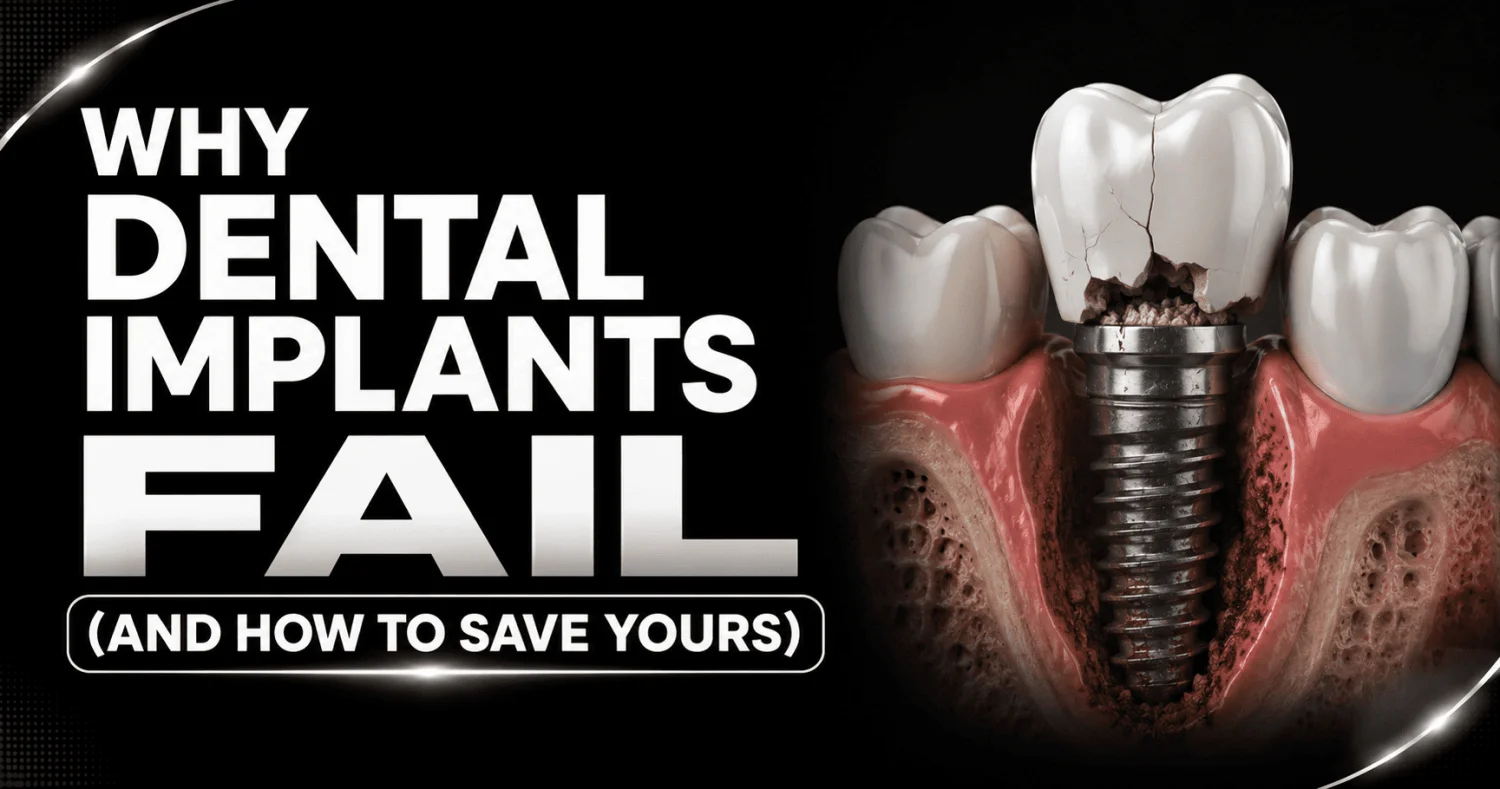
Why Do Dental Implants Fail? Causes, Warning Signs & How to Prevent It
Medically Reviewed by Dr. Shashi
Introduction
If you're researching this topic, you're probably one of two people: someone considering an implant who has read a scary forum post, or someone who already has an implant that feels "off" — loose, sore, or just not right. Both are valid reasons to want a straight answer.
Here's the honest one: dental implants have a long-term success rate of roughly 95–98% when placed and maintained correctly. That means failure is uncommon, but it isn't rare enough to ignore, and when it happens, there is almost always an identifiable, preventable reason behind it.
This article breaks down exactly why implants fail, split into early failure (before or during healing) and late failure(months to years later), what warning signs to watch for, and — based on real clinical experience — the mistakes we see most often in patients who come to us after a failure elsewhere.
Early vs. Late Implant Failure: Know the Difference
Understanding when a failure happens tells you a lot about why it happened.
Early failure (0–6 months) Usually related to the implant not integrating with the jawbone (a process called osseointegration). This is typically a surgical, biological, or planning issue.
Late failure (6 months–several years later) Usually related to what happens after the implant has successfully healed — most commonly gum and bone disease around the implant, or mechanical overload.
Roughly 1 in 3 implant failures we see clinically are early, and 2 in 3 are late — which tells you that long-term maintenance matters just as much as the surgery itself.
The 12 Most Common Causes of Dental Implant Failure
1. Peri-implantitis (the #1 cause of late failure)
This is inflammation and infection of the gum and bone around an implant, caused by bacterial buildup — very similar to gum disease around a natural tooth. Left untreated, it slowly destroys the bone holding the implant in place.
2. Insufficient bone density or volume
An implant needs enough healthy jawbone to anchor into. If bone was lost due to long-term tooth absence, gum disease, or aging, the implant may lack the stability to integrate — unless bone grafting is done first.
3. Poor primary stability at placement
If the implant isn't mechanically stable the moment it's placed, even excellent bone won't save it. This is a surgical planning and technique issue, closely tied to accurate 3D imaging before surgery.
4. Smoking
Smoking is one of the single biggest predictors of implant failure. It restricts blood flow to the gums and bone, slows healing, and significantly raises infection risk. Failure rates in smokers can be 2–3x higher than in non-smokers.
5. Uncontrolled diabetes or other systemic conditions
Poorly controlled blood sugar impairs healing and increases infection susceptibility. Autoimmune conditions and certain medications (like bisphosphonates for osteoporosis) can also interfere with bone healing.
6. Occlusal overload (bite force mismanagement)
If an implant is subjected to more force than it can handle — from a bad bite, missing opposing teeth, or undiagnosed teeth grinding (bruxism) — it can loosen over time, even if it healed perfectly at first.
7. Poor oral hygiene after placement
An implant doesn't get cavities, but the gum and bone around it can absolutely get infected if plaque isn't controlled. This is one of the most common — and most preventable — causes of late failure.
8. Premature loading
Placing a crown or denture on the implant before it has fully integrated with the bone can disrupt the healing process before it's complete.
9. Infection at the surgical site
Contamination during surgery, inadequate sterile technique, or poor post-op care can introduce bacteria before the site has a chance to heal.
10. Implant positioning or angulation errors
An implant placed at the wrong angle or depth can affect long-term load distribution, hygiene access, and aesthetics — all of which can shorten its lifespan.
11. Allergic or inflammatory reaction to implant material
Rare, but documented. Some patients have sensitivity reactions to titanium, though this is uncommon with modern medical-grade titanium and titanium alloys.
12. Skipping follow-up and maintenance visits
Implants require periodic professional check-ups just like natural teeth — arguably more, since early peri-implantitis is often painless and only detectable on examination or X-ray.
Warning Signs Your Implant May Be Failing
Watch for:
- Persistent pain, throbbing, or discomfort weeks after healing should be complete
- Swelling or redness of the gum around the implant
- The implant feeling loose or shifting when you bite
- Difficulty chewing on that side
- Gum recession exposing the metal implant
- A bad taste or persistent bad breath localized to that area
- Pus or discharge near the implant site
None of these should be ignored or "waited out." Early intervention on peri-implantitis, for example, can often save the implant. Late-stage detection frequently cannot.
What We Look For During Diagnosis (Clinical Insight)
When a patient comes to us — either for a new implant or after a failure elsewhere — our diagnostic process goes well beyond "does this tooth feel loose."
We specifically evaluate:
- 3D bone volume and density mapping via CBCT scan, not just a 2D X-ray, since 2D imaging can hide bone loss on the inner or outer jaw wall
- Gum tissue quality and thickness, since thin biotype gums are more prone to recession around implants long-term
- Bite (occlusal) analysis, checking for grinding patterns, uneven contact, or missing opposing teeth that could overload a new implant
- Full medical history review, including smoking status, diabetes control (HbA1c where relevant), and any bone-affecting medications
- Sinus proximity for upper jaw implants, to avoid perforation risk
This is a genuinely different process than simply "measuring for a screw and a crown," and it's the single biggest reason planning-stage failures are largely preventable.
Common Mistakes We See Patients Make (Clinical Insight)
Based on real cases we've treated, the recurring patterns are:
- Choosing the cheapest option without checking what's included. A low upfront price sometimes means no CBCT scan, no bone grafting when needed, or lower-grade implant materials — all of which raise failure risk later.
- Skipping the healing period recommendations — pushing to get the final crown placed early because of travel plans or impatience.
- Not disclosing grinding habits or smoking during consultation, which changes the treatment plan significantly.
- Assuming implants don't need cleaning like natural teeth. Patients often under-brush around implants, assuming they're "immune" to problems.
- Ignoring early soreness for weeks, assuming it will "settle down" on its own instead of getting it checked.
How Our Treatment Planning Differs (Clinical Insight)
A few specific practices we follow that directly reduce failure risk:
- Staged treatment when bone is inadequate. Rather than placing an implant into insufficient bone "to save time," we plan bone grafting first and allow proper healing — even if that means a longer overall timeline.
- Delayed loading protocols where bone quality is borderline, rather than immediate same-day crowns, unless primary stability clearly supports it.
- Night-guard recommendations for patients showing signs of bruxism, fitted before the final crown stage, not after a problem appears.
- Structured recall schedule — professional implant check-ups at set intervals in year one, then annually, specifically checking for early peri-implantitis signs before they become visible to the patient.
A Real (Anonymized) Patient Journey
A patient in his late 40s came to us after an implant placed elsewhere began feeling loose around the 14-month mark. Investigation showed early-stage peri-implantitis, with bone loss localized to one side — traced back to a bite that hadn't been properly balanced against the opposing molar, causing years of subtle overload plus plaque accumulation in a hard-to-clean area.
Treatment involved deep cleaning around the implant, minor bite adjustment, and a revised home-care routine with a specific interdental brush shape. At the 12-month follow-up, the implant was stable with no further bone loss. The lesson: catching peri-implantitis early, before significant bone loss, is often the difference between saving and losing an implant.
Cost vs. Value: Why Cheaper Implants Sometimes Cost More Later
It's worth being direct about this, because it's the single biggest driver of preventable failure we see. A lower upfront implant price is not automatically a worse choice — but it is worth confirming exactly what's included:
- Is a 3D CBCT scan part of the planning, or only a basic X-ray?
- Is bone grafting priced separately, and would it be recommended if bone volume is borderline?
- What implant brand and material grade is being used?
- Is there a structured follow-up/maintenance plan included, or is it a "one and done" service?
A failed implant typically costs more to fix — removal, bone regeneration, healing time, and a replacement implant — than the difference in price between a properly planned procedure and a rushed one. Value, in implant dentistry, is really about risk-adjusted cost, not sticker price.
Frequently Asked Questions
Q1: How common is dental implant failure? Implants have a long-term success rate of about 95–98%, meaning failure occurs in roughly 2–5% of cases, most often linked to smoking, uncontrolled diabetes, poor hygiene, or inadequate bone at placement.
Q2: Can a failing implant be saved, or does it always need removal? It depends on the stage. Early-stage peri-implantitis or a loose crown (not the implant itself) can often be treated and saved. Advanced bone loss around the implant usually cannot be reversed and may require removal and later replacement.
Q3: How soon after placement can an implant fail? Early failure typically shows up within the first 3–6 months, during the bone integration period. Late failure can occur years after successful healing, usually due to gum/bone infection or excess bite force.
Q4: Does smoking really affect implant success that much? Yes. Smoking reduces blood flow to healing tissue and significantly raises infection risk, and is one of the most well-documented risk factors for both early and late implant failure.
Q5: What are the first signs I should watch for after getting an implant? Persistent pain beyond the expected healing window, swelling or redness of the gum, a loose or shifting feeling, or any discharge near the site — all warrant a prompt check-up rather than waiting.
Q6: Do all-on-4 or all-on-6 implants fail differently than single implants? The underlying causes (bone quality, infection, overload, hygiene) are the same, but full-arch systems distribute bite force differently, so overload and bite-balance issues are watched even more closely during planning.
Q7: How do I choose a clinic that minimizes implant failure risk? Look for 3D imaging as standard, transparency about bone grafting needs, clear implant brand/material disclosure, and a defined post-placement follow-up schedule — not just the lowest quoted price.
Explore the Full Dental Implants Knowledge Hub
This article is part of our complete Dental Implants resource series. Read next:
- All-on-4 Dental Implants: Complete Guide
- All-on-6 Dental Implants: Is It Right for You?
- Bone Grafting for Dental Implants: What to Expect
- Healing After Dental Implants: Week-by-Week Timeline
- Dental Implant Cost vs. Value: What You're Really Paying For
- The Complete Dental Implant Patient Journey, Start to Finish
Related treatment page: Dental Implants at Dent Ally
Closing Note
Implant failure is uncommon, and almost always traceable to a specific, identifiable cause — most of which are preventable with thorough diagnosis, honest planning conversations, and consistent aftercare. If you're evaluating where to get an implant placed, or want a second opinion on one that doesn't feel right, our team at Dent Ally — recognized as one of the best dental clinics in Delhi for implant diagnostics and planning — is happy to review your case and give you a clear, honest assessment.
-
Other Blogs
- Dental Veneers: Before & After, Benefits, and Common Myths
- The Science Behind Smile Makeovers: What You Should Know
- Are Dental Implants and Metal-Ceramic Crowns Safe During an MRI?
- How Long Do Veneers Really Last?
- How Do I Know If I Need a Full Mouth Rehabilitation? A Comprehensive Clinical Guide
- All-on-4 vs All-on-6 Dental Implants: Which Is Right for You?
Make An Appointment
-
Other Blogs
- Things to Consider While Choosing a Dental Practice
- Can I Wait 6 Months to Fill a Cavity? Understanding the Risks and Consequences
- Why We Use Nobel Biocare Dental Implants: A Clinical Perspective
- Advanced Bioclear Treatment in Delhi NCR – A Minimally Invasive Smile Makeover
- Affordable Dental Care Options in Delhi: A Path to Healthy Smiles Within Reach
- What Is A Dental Black Triangle? Causes And Treatments
- Do’s and Don’ts Post A TOOTH EXTRACTION, Best tooth extraction in Delhi
- Basics and Important Things About Root Canal
- Dental Implant Surgery: Getting To Know The Key Steps Involved In The Procedure
- Tooth Extraction – Key Things You Need To Know
- ✈️ Top 5 Reasons Canadians, Australians & Americans Fly to India for Dental Implants
- How to stop bad breath from mouth?
- Make Your Oral Health Better By Brushing Up On Dental Care Basics
- Advancements in Dental X-Rays: Safeguarding Dental Health in India with Improved Technology
- Why Do You Need To Research Before Going to Dentist?
- How To Choose the Best Dental Implant Clinic in Delhi?
- Optical Detection of Endodontic Infection: A Game-Changer in Dental Care
- 🥦🦷 Fluoride-Rich Foods for Stronger Teeth: A Dentist-Recommended Guide in India
- How expensive are veneers?
- Embracing Preventive Dentistry: Safeguarding Your Smile for the Future
- The Ultimate Guide: Which Dental Offices Provide Dental Implant Services in My Area?
- Transform Your Gummy Smile: A Complete Guide to Causes & Modern Treatments
- Some Of The Impotant FAQs On Dental Implants
- Safe Amalgam Removal (SMART Protocol)
- How to Fix Broken Teeth: A Comprehensive Guide
- Everything You Need To Know About Dental Implant
- Most Common Dental Treatments Performed By A Professional Dentist
- How Remote AI Monitoring is Reducing Dental Chair Time for Invisalign Patients
- Dental Implants: Aware of 4 Early Complications
- How to Cure Gingivitis in a Week: Your Guide to Healthy Gums
- Exploring Affordable Dental Implants: The Cheapest Countries for Your Dental Health
- Having unexplained pain? Not sure about the Source and Cause of Your Pain?
- Missing Teeth Problem and Its Treatment
- How Long Do Crowns Last on Front Teeth?
- Why Do Dental Implants Fail? Causes, Warning Signs & How to Prevent It
- Is A RCT painful?
- Diastema – 5 Ways To An Effective Treatment
- Transforming Smiles and Lifestyles: A Comprehensive Guide to Invisalign Treatment
- Can I Eat After a Root Canal?
- 3 Reasons Why You Shouldn’t Feel Jittery About Dental Implants
- Why Do We Need Dental Implants & What They Do?
- Does A Tooth Worm Really Exist?
- Oral Bacteria and Brain Abscesses
- Dental Erosion: What You Need To Know
- The Repercussions Of Neglecting A Tooth Pain
- Dental Implant – Procedure, Types, And Cost Associated
- Know Your Teeth
- What Your Saliva pH Reveals About Your Oral Health
- Restoring Dental Health: Comprehensive Full Mouth Reconstruction
- Enhance Your Beauty With Best Cosmetic Dentist In Delhi