


Are Dental Implants and Metal-Ceramic Crowns Safe During an MRI?
Medically Reviewed by Dr. Shashi
Patients often ask us whether dental implants or metal-ceramic crowns can cause problems during an MRI scan. It's a valid concern, especially for those who have recently undergone treatment or are scheduled for an MRI for the first time.
Usually, but the MRI team must confirm suitability for your particular restoration. Modern dental implants and most dental crowns are considered safe during MRI scans. In the vast majority of cases, they do not move, loosen, or interfere with the scan in a way that affects patient safety.
At Dent Ally, regarded by many patients as one of the best dental clinics in Delhi and a preferred destination for dental implants and tooth crowns, we routinely counsel patients who have similar questions before they undergo medical imaging.
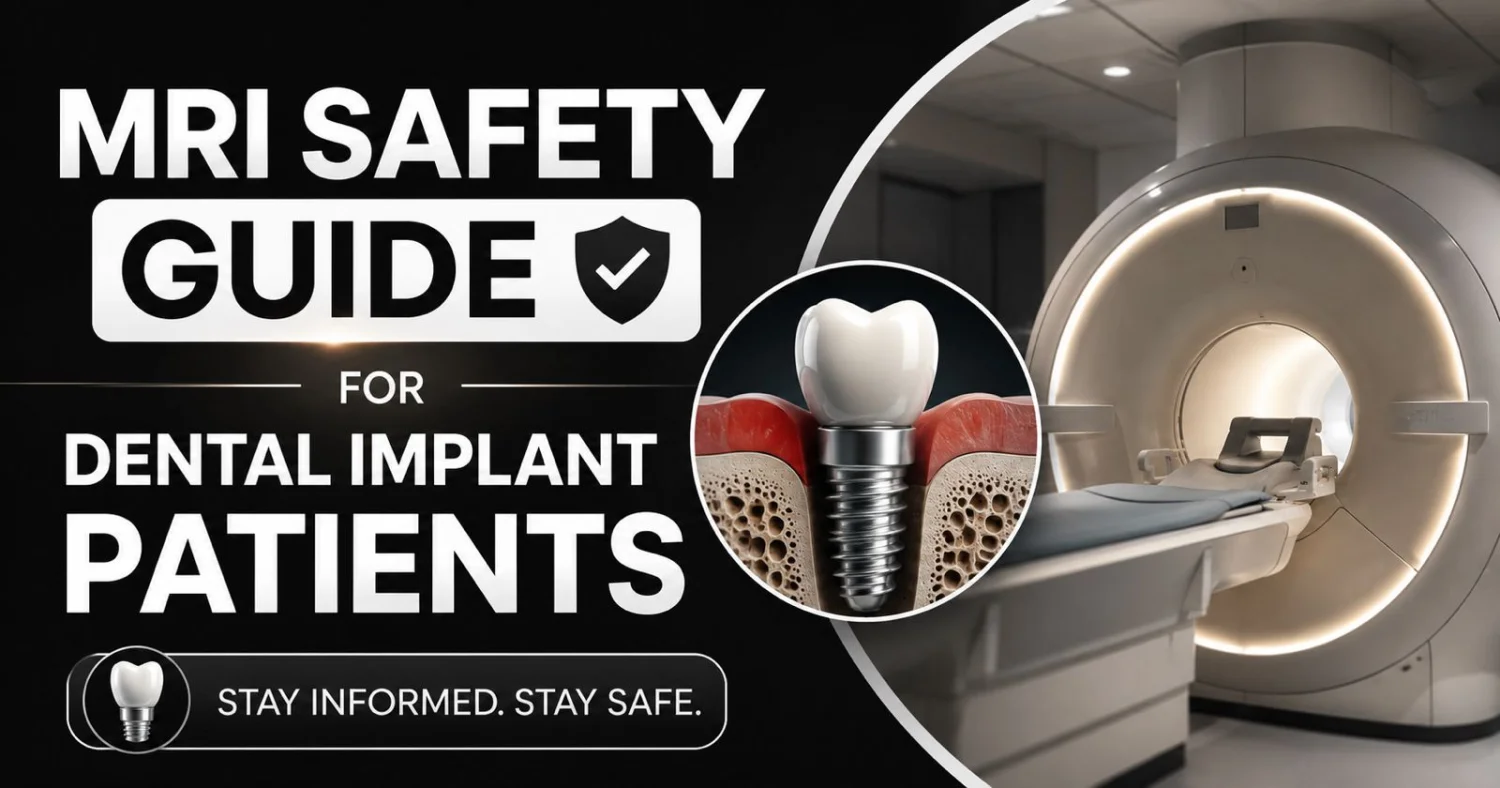
Do Dental Implants Affect an MRI?
Most dental implants placed today are manufactured from medical-grade titanium, a material that is highly biocompatible and non-ferromagnetic. This means the implant is not attracted to the magnetic field used during an MRI.
MRI suitability depends on the exact implant and restoration components, manufacturer information, and scan conditions. Complete the MRI team’s safety screening before the scan.
One possible limitation is that titanium implants can sometimes create a small area of image distortion if the MRI is focused on the face, jaw, or surrounding structures. If the scan is being performed on another part of the body, such as the spine, knee, abdomen, or pelvis, dental implants generally have no impact on the quality of the images.
Keep a record of your dental implant brand and restoration materials. Different types of dental implants and prosthetic components may have different manufacturer instructions.
Are Metal-Ceramic Crowns MRI Safe?
Usually, after the MRI team completes its safety screening.
Metal-ceramic crowns, also known as porcelain-fused-to-metal (PFM) crowns, consist of a ceramic outer layer supported by a metal substructure. Although different alloys are used depending on the clinical situation, these crowns are securely cemented onto the teeth and can usually be scanned after the MRI team checks their suitability.
Like dental implants, they may produce minor image artefacts during scans of the head and neck, so tell the MRI team what dental restorations you have.
Should You Tell Your Radiologist?
It is always advisable to inform the radiologist or MRI technician if you have:
- Dental implants
- Dental crowns or bridges
- Orthodontic braces
- Dentures containing metal
- Any other metallic dental restorations
This information helps the radiology team interpret the images correctly, particularly if the MRI is being performed in the head and neck region.
Does This Mean Dental Treatment Should Be Avoided?
Not at all.
Whether you receive dental implants, zirconia crowns, or metal-ceramic crowns, these restorations are designed to remain stable during everyday life, while MRI suitability must be checked for the specific materials and scan.
At Dent Ally, one of the best dental clinics in Delhi for advanced implant and restorative dentistry, we use internationally recognised implant systems and premium restorative materials that meet global safety standards. Our patients travel from across India as well as countries including the UK, USA, Canada, Australia, and New Zealand for dental implants, full-mouth rehabilitation, and dental crowns, making us one of the most preferred practices for complex restorative dental treatment.
If you have been advised to undergo an MRI after receiving dental treatment, there is usually no cause for concern. Simply inform the radiology team about your dental restorations before the scan. In almost every case, the MRI can be performed safely without removing your implants or crowns.
Frequently Asked Questions
Do I need to tell the MRI team about dental implants?
Yes. Declare implants, crowns, bridges, braces, and removable dental appliances during screening.
Should I bring my implant card to the MRI appointment?
Bring it if available, or ask your dentist for the implant manufacturer, model, and restoration materials.
Are all dental implants safe in a 3-tesla MRI scanner?
Do not assume this. The MRI team must check the manufacturer’s conditions against the planned scanner and examination.
Can dental restorations affect a brain or jaw MRI?
Metal may create image artefacts near the mouth. The radiology team will decide how to obtain useful images.
Should I remove dentures before an MRI?
Tell the MRI team about any removable appliance and follow their instructions before entering the scanner room.
Can I have an MRI soon after implant surgery?
Give the MRI team the implant details and surgery date. They should confirm the appropriate timing and scan conditions with your treating team.
-
Other Blogs
- Dental Veneers: Before & After, Benefits, and Common Myths
- The Science Behind Smile Makeovers: What You Should Know
- How Long Do Veneers Really Last?
- Why Do Dental Implants Fail? Causes, Warning Signs & How to Prevent It
- How Do I Know If I Need a Full Mouth Rehabilitation? A Comprehensive Clinical Guide
- All-on-4 vs All-on-6 Dental Implants: Which Is Right for You?
Make An Appointment
-
Other Blogs
- Can Teeth Regrow? The Truth About Natural Tooth Regeneration
- ✈️ Top 5 Reasons Canadians, Australians & Americans Fly to India for Dental Implants
- Future is Here: “Digital Implants” What, Why and How?
- 🦷 How to Plan a Dental Trip to Delhi: Step-by-Step Guide for First-Timers
- New Revolutionary Way to Keep Your Mouth Healthy
- What Is A Dental Black Triangle? Causes And Treatments
- Advice on How to Smile Your Best
- 🥦🦷 Fluoride-Rich Foods for Stronger Teeth: A Dentist-Recommended Guide in India
- Innovations in Dental Care: Unveiling the Impact of Modern Technologies
- The Role of a Dentist in Maintaining Your Oral Health
- How Smile Makeover Leaves A Positive Impact On Your Life?
- Tips For Keeping Your Kid's Oral Health Protected
- WHAT TO DO IF YOU HAVE TOOTH PAIN DURING COVID-19?
- Is India a Good Place for Dental Treatment?
- How to Cure Gingivitis in a Week: Your Guide to Healthy Gums
- 7 Dental Specialties You Should Know
- Bridal Radiance: Mastering Your Smile Makeover with India's Top Cosmetic Dentistry Treatments
- Why Is It A Necessity To Choose A Right Dentist?
- Seniors' Dental Health: Challenges and Solutions
- 😬🦷 Front Tooth Broken in Half? Here’s How Top Dentists in India Can Fix It
- What are 10 things to keep your teeth healthy? Your Ultimate Guide
- Some Of The Impotant FAQs On Dental Implants
- Why Do You Need To Research Before Going to Dentist?
- Is Teeth Cleaning Painful?
- How long does a dental implant take to finish?
- Step-by-Step Journey of a Full Mouth Implant Patient: Before, During & After
- Got the biggest solitaire but still feel something is missing?
- Are you Pregnant? Don't Let This Miss Your Attention
- Which Dental Veneer Should You Choose?
- Top Reasons Why to Select The Best Dentist
- Treatment Options for Missing Teeth: Restore Your Smile & Confidence
- Can I Eat After a Root Canal?
- Reasons Why You Shouldn’t Be Nervous About Dental Implant Surgery
- Dental Implant Complications: Understanding Risks and Navigating Safe Practices in India
- How Teeth Deep Cleaning Prevents Severe Gum Disease
- Important Do's and Don'ts for Pregnant Women
- Misconception About Kid's Dental Health
- Everything to Know About Invisible Aligners For Dental Solutions
- Everything you should know about dental implants before getting it done
- The Aging Smile: How Time Changes Your Teeth and How to Protect Them for a Lifetime
- Tooth Extraction – Key Things You Need To Know
- Gingivitis – Cause, Symptoms, And Treatment
- Dent Ally Recognized Among Top Companies in Global Dental Tourism Market by The Business Research Company
- Understanding the Root Causes: Why Dental Problems Occur and How Dentists in Delhi Can Help
- How Dental Implants Can Also Improve Your Appearance?
- When do we need Dental Implant Surgery?
- How to Repair Broken Teeth: Comprehensive Treatment Options
- 🇦🇺 Dent Ally Reviews: What Australian Patients Say About Dental Implants in India
- What Should You Do About a Wisdom Tooth Cavity?
- Dental Implants for Diabetic Patients in India: A Guide to Safe & Successful Treatment